TheJakartaPost
Please Update your browser
Your browser is out of date, and may not be compatible with our website. A list of the most popular web browsers can be found below.
Just click on the icons to get to the download page.


Popular Reads
Top Results
No results found. Please check your search term and try again
Can't find what you're looking for?
View all search results
Popular Reads
Top Results
No results found. Please check your search term and try again
Can't find what you're looking for?
View all search results Unfolding Stories
Guiding students toward independence
Spiritual awakening, which in turn awakens the body, begins with a person's willingness to develop and care for literacy, sensitivity and literacy skills; read, write, speak, calculate and solve problems.
Change text size
Gift Premium Articles
to Anyone
Share the best of The Jakarta Post with friends, family, or colleagues. As a subscriber, you can gift 3 to 5 articles each month that anyone can read—no subscription needed!
 Set as preferred source
I
t is not a coincidence that composer Wage Rudolf Supratman put the phrase "Wake up his soul" before "Wake up his body" in the lyrics of the national anthem “Indonesia Raya”. Even though he did not have the opportunity to hear the national anthem played on Independence Day on Aug. 17, 1945, as a literate human figure, Wage truly realized and believed that the spirit, passion and motivation that comes from within will be able to move and become the driving force and leverage for this body to rise and move forward — dare to face various challenges in life.
Confirmed through scientific research, the effects of the hormone adrenaline enable a person to dare to take on various challenges, including carrying the burden (wounds) of the challenges faced. Conversely, those who lose passion and enthusiasm in themselves will trigger the hormone cortisol, which plunges a person into the trap of mental stress and grief for a long time.
It is proven that the mental state of a person who is transformed into enthusiasm, hope, motivation and joy will accelerate the process of recovery and self-healing. In terms of spirituality, the description of the mind is narrated in the wise sentence: "A joyful heart is good medicine, but a broken spirit dries up the bones." (Proverbs 17:22).
Spiritual awakening, which in turn awakens the body, begins with a person's willingness to develop and care for literacy, sensitivity and literacy skills; read, write, speak, calculate and solve problems. Thus, literacy is a parameter to measure the resilience and growth of a nation's human resources.
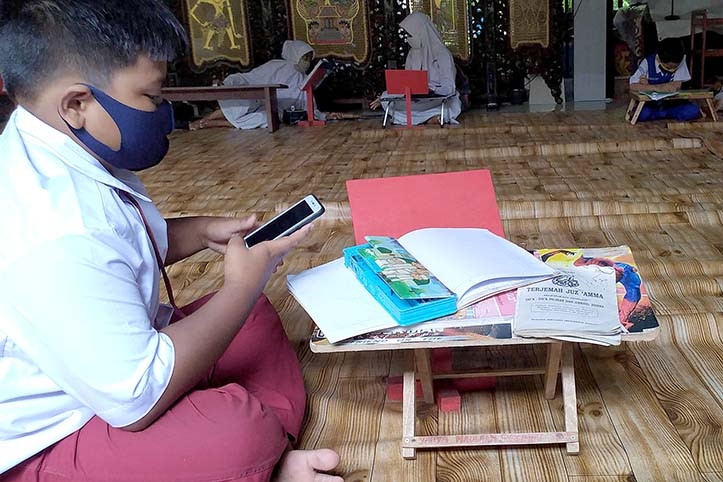
For almost two years, the COVID-19 pandemic has claimed many lives and affected many aspects of human life. In the education field, the pandemic has forced students and teachers to move classes to the home. Learning activities have yet to return to normal.
As a nation with an abundant demographic bonus, with a large number of young people at a productive age and with technology literacy (internet), it will be very effective if they are equipped with literacy skills and abilities. However, the quality and literacy skills of the nation's children remain far from encouraging.
Suherman (2009) said this literacy crisis is so obvious, this nation is experiencing haziness and myopia, ironically due to the low illiteracy rate. Around 4 percent of the Indonesian population is still illiterate. If the Indonesian population totals 271 million, then about 10.8 million people are illiterate, which is still a big number.