TheJakartaPost
Please Update your browser
Your browser is out of date, and may not be compatible with our website. A list of the most popular web browsers can be found below.
Just click on the icons to get to the download page.


Popular Reads
Top Results
No results found. Please check your search term and try again
Can't find what you're looking for?
View all search results
 Unfolding Stories
Popular Reads
Top Results
No results found. Please check your search term and try again
Can't find what you're looking for?
View all search resultsFor government, Papuan violence is tough nut to crack
The terrorist label was seemingly a mere reaction to the situation on the ground, which may have gone beyond the government’s control.
Change text size
Gift Premium Articles
to Anyone
Share the best of The Jakarta Post with friends, family, or colleagues. As a subscriber, you can gift 3 to 5 articles each month that anyone can read—no subscription needed!
 Set as preferred source
T
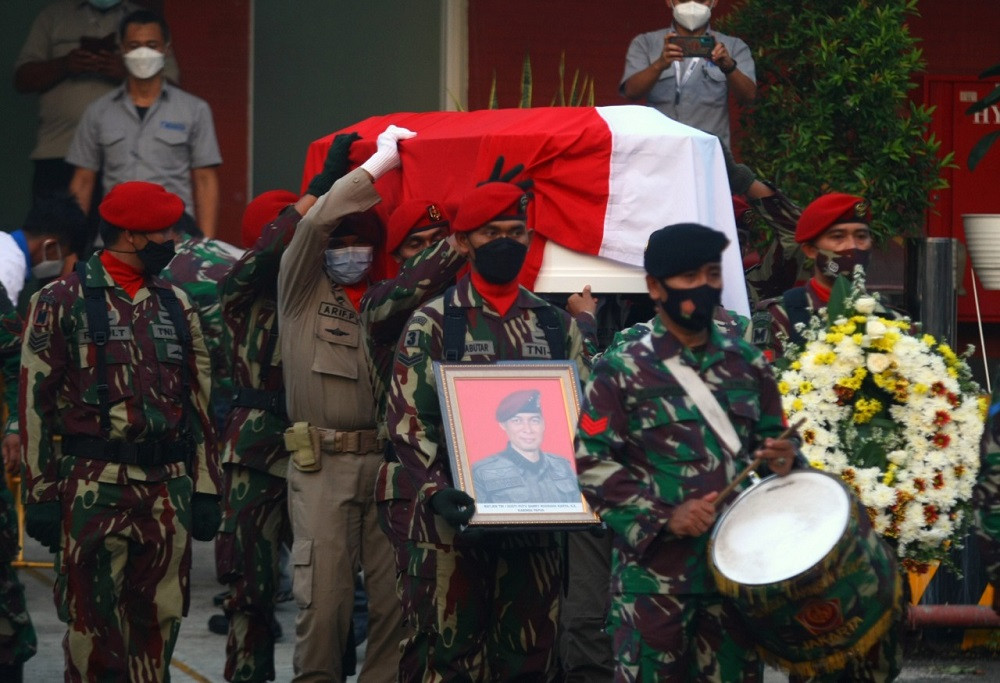
he government, through Coordinating Political, Legal and Security Affairs Minister Mahfud MD, declared Papuan armed groups terrorists on April 29. This move followed a string of attacks on civilian and security forces, one of which claimed the life of the province’s State Intelligence Agency (BIN) chief.
Mahfud said the rebel groups were responsible for acts of violence that killed 95 people, both civilians and security personnel, and injured 120 others over the past three years.
Classifying the Papuan rebels as terrorists will justify measures in accordance with the 2018 Terrorism Law.
The decision shows the government’s serious intent to quell separatism in Papua. But for some reason, instead of explaining why labelling the rebel groups “terrorists” will be effective, the government has focused on providing justifications for the policy.
When announcing the terrorist label for Papuan rebel groups on April 29, Mahfud said they had committed “mass violence”, which the 2018 Terrorism Law defines as an act of terrorism. A week later, following public criticism of the policy, including from influential Papuan figures and the country’s human rights activists, Mahfud provided a lengthier explanation of the government’s initiative.
The failure to explain why the policy would be effective demonstrates that the government lacks a well prepared plan to implement the policy. The terrorist label was seemingly a mere reaction to the situation on the ground, which may have gone beyond the government’s control.
Branding Papuan rebel groups terrorists, however, is a precursor to larger police and military operations in the country’s easternmost territory. The more security troops are deployed, the greater chance that human rights violations will occur, as in the case of operations to quell separatism in Aceh and East Timor in the past.