TheJakartaPost
Please Update your browser
Your browser is out of date, and may not be compatible with our website. A list of the most popular web browsers can be found below.
Just click on the icons to get to the download page.


Popular Reads
Top Results
No results found. Please check your search term and try again
Can't find what you're looking for?
View all search results
 Unfolding Stories
Popular Reads
Top Results
No results found. Please check your search term and try again
Can't find what you're looking for?
View all search resultsWho's up, who's down: Farewell to Asia 2020
A 2020 Pew Research survey fielded in 14 countries including Australia, the US and several Asian and European nations revealed that attitudes toward Xi and China have now reached new lows.
Change text size
Gift Premium Articles
to Anyone
Share the best of The Jakarta Post with friends, family, or colleagues. As a subscriber, you can gift 3 to 5 articles each month that anyone can read—no subscription needed!
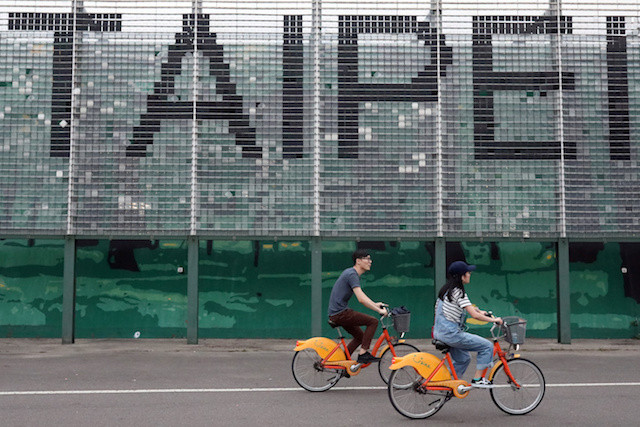
As 2021 thankfully begins, we take one last look at the year that was.
For Indonesia and all Southeast Asia, 2020 was a year that could not be over fast enough. The last week of December saw COVID-19 cases top 700,000 in Indonesia, with the Health Ministry reporting that the death toll had topped 20,500. Both numbers were the highest for all ASEAN nations.
The capital city, Jakarta, alone accounted for some 170,000 cases, with the virus now having spread to all provinces.
Elsewhere, the ongoing economic and health catastrophe has encompassed more than 1.7 million dead globally—including more than 325,000 in the United States and more than 147,000 in India.
Yet, less than 12 months since the novel coronavirus, SARS-Cov2, first identified in China would spread with deadly effect to the world, there lies hope for a better year ahead amidst unprecedented progress on vaccines and treatments. So, who was up and who was down in Asia in 2020? Here’s our annual assessment.
Worst year: Asia’s poorest
As in too many places, it is the poorest and most vulnerable in Asia who have been hit hardest by COVID-19. The World Bank reports that Asia’s most vulnerable have borne the brunt of a “triple shock” — the pandemic itself, the economic fallout from the containment measures, and the ensuing global recession. Amidst collapsing tourism and weakened exports, hunger grows, and access to jobs, technology and education shrinks.
Across the Indo-Pacific, migrant workers in particular have suffered the consequences of economic lockdowns. The diversity of victims of the coronavirus's economic impact has ranged from seafood workers from Myanmar in Thailand's seafood industry to medical glove factory workers from Nepal in Malaysia. In mid-December, Taiwan suspended entry of Indonesian migrant workers indefinitely saying Indonesia had been unable to improve the accuracy of its COVID-19 test results.
The Asian Development Bank now projects that the coronavirus could push 160 million more into poverty across Asia. The region’s poverty rate will increase for the first time in 20 years, adds the World Bank.
And so sadly, it is Asia’s rapidly growing class of the “new COVID poor,” who receive the depressing distinction of the worst year in Asia.
Bad year: WHO and Dr. Ghebreyesus
It should have been a year for the World Health Organization (WHO) to shine. Instead, the specialized United Nations health agency and its beleaguered director general, Tedros Adhanom Ghebreyesus of Ethiopia, found themselves in a no-win situation facing accusations of not holding China accountable for its less than transparent handling of the coronavirus.
Hidebound by the rules of bureaucracy and diplomacy, the WHO could say little as China delayed release of information, allowed millions to travel from Wuhan during the Chinese New Year period, and cracked down on citizen journalists and whistleblowers. In February, Chinese doctor Li Wenliang himself died from COVID-19 after seeking to warn others of a mysterious SARS-like virus early on.
President Trump said the US—the WHO’s largest donor—would leave the organization, alleging that Ghebreyesus and the WHO were beholden to China. A turnaround could be at hand with a new US Administration, but it’s been a decidedly bad year for WHO and Ghebreyesus.
Mixed-year: Xi Jinping and the BRI
China President Xi Jinping’s successes at home so far in crushing COVID-19 and dissent in Hong Kong were tempered by growing pushback abroad in 2020 against his much touted Belt and Road Initiative (BRI).
This grand “One Belt One Road” infrastructure scheme launched in 2013 to connect some 70 countries with a “new Silk Road” of Chinese-financed ports, railways and highways, and other projects ran into growing push back amidst COVID-19 slowdowns and worries about debt owed to China. This was underscored at year-end as Australia approved new laws that would give Prime Minister Scott Morrison powers to veto or scrap agreements that state governments reach with foreign countries, including a BRI project in the state of Victoria.
A 2020 Pew Research survey fielded in 14 countries including Australia, the US and several Asian and European nations revealed that attitudes toward Xi and China have now reached new lows. As many as 78 percent of respondents stated that they had little or no confidence Xi would do the right thing in global affairs, up from 61 percent in 2019.
Perhaps 2020 was a decidedly mixed year for Xi despite, or perhaps because of, the reality of China’s engagement abroad—from conflict on the Himalayan border with India to trade tensions and disputes over the Mekong River and the South China Sea.
Good year: Asia’s e-commerce giants
The US might have Amazon, and Indonesia's consumers know Tokopedia, Shopee and Bukalapak, but a diversity of Asia’s e-commerce giants also found 2020 to be an emphatically good year.
E-commerce in Asia was already on the rise well before COVID-19. GoJek of Indonesia and Grab of Singapore have long had well established digital payment platforms. And with the pandemic, the pace of adoption has quickened as lockdowns drove more consumers online, from India to Japan.
Chinese e-commerce giants Alibaba and JD.com racked up a record US$115 billion in sales on a single day. And a report from Google, Temasek Holdings and Bain & Company projects e-commerce in Southeast Asia to exceed $100 billion by 2025, up from $38 billion in 2019. All this is good news across Asia for e-commerce platforms such as Lazada, Taobao, Shopify, Bukalapak and Sendo. Tokopedia might also be headed to a blockbuster initial public offering listing in 2021.
Importantly, 2020 might also herald many a good year ahead as consumers build on new digital habits, from fintech to telemedicine.
Great year: Tsai-Ing Wen and Jacinda Ardern
Both women won landslide reelection this year, but that’s not all that Taiwan President Tsai-ing Wen and New Zealand Prime Minister Jacinda Ardern have in common. These two leaders led charges against COVID-19, instituting strict lockdown measures that prevented community transmission in their countries while also avoiding the draconian practices adopted by China.
In late-December, Taiwan with a population of about 24 million had reported just 776 cases and seven deaths. New Zealand with a population of about 5 million had recorded about 2125 cases and 25 deaths. Arden has also remained unruffled during a live telecast in the midst of an earthquake, and continues to lead her nation forward amidst enduring climate change and terrorism worries.
And when it comes to economic numbers, Tsai and the people and businesses of Taiwan may well be a role model for all. A campaign proclaiming “Taiwan can help” has sought to turn the island’s success in battling COVID-19 into geopolitical gains. By mid-December, Taiwan’s 2020 economic growth looked to outpace much of Asia’s including that of mainland China—the world’s second largest economy— for the first time in decades.
So, in this most difficult of years, Best Year in Asia goes to a dynamic duo of decisive female leaders who are showing the way to a better year ahead.
***
Curtis S. Chin, a former United States ambassador to the Asian Development Bank, is managing director of advisory firm RiverPeak Group, LLC. Jose B. Collazo, is a Southeast Asia analyst and project consultant at RiverPeak Group.