TheJakartaPost
Please Update your browser
Your browser is out of date, and may not be compatible with our website. A list of the most popular web browsers can be found below.
Just click on the icons to get to the download page.


Popular Reads
Top Results
No results found. Please check your search term and try again
Can't find what you're looking for?
View all search results
 Unfolding Stories
Popular Reads
Top Results
No results found. Please check your search term and try again
Can't find what you're looking for?
View all search resultsBRI Micro & SME Index Quarter IV: Optimism of MSMEs amid challenges of economic recovery
The results of the MSME Business Activity Survey in the fourth quarter of 2020 indicated that MSME business activities had decreased slightly from the previous quarter.
Change text size
Gift Premium Articles
to Anyone
Share the best of The Jakarta Post with friends, family, or colleagues. As a subscriber, you can gift 3 to 5 articles each month that anyone can read—no subscription needed!
 (Courtesy of BRI)
T
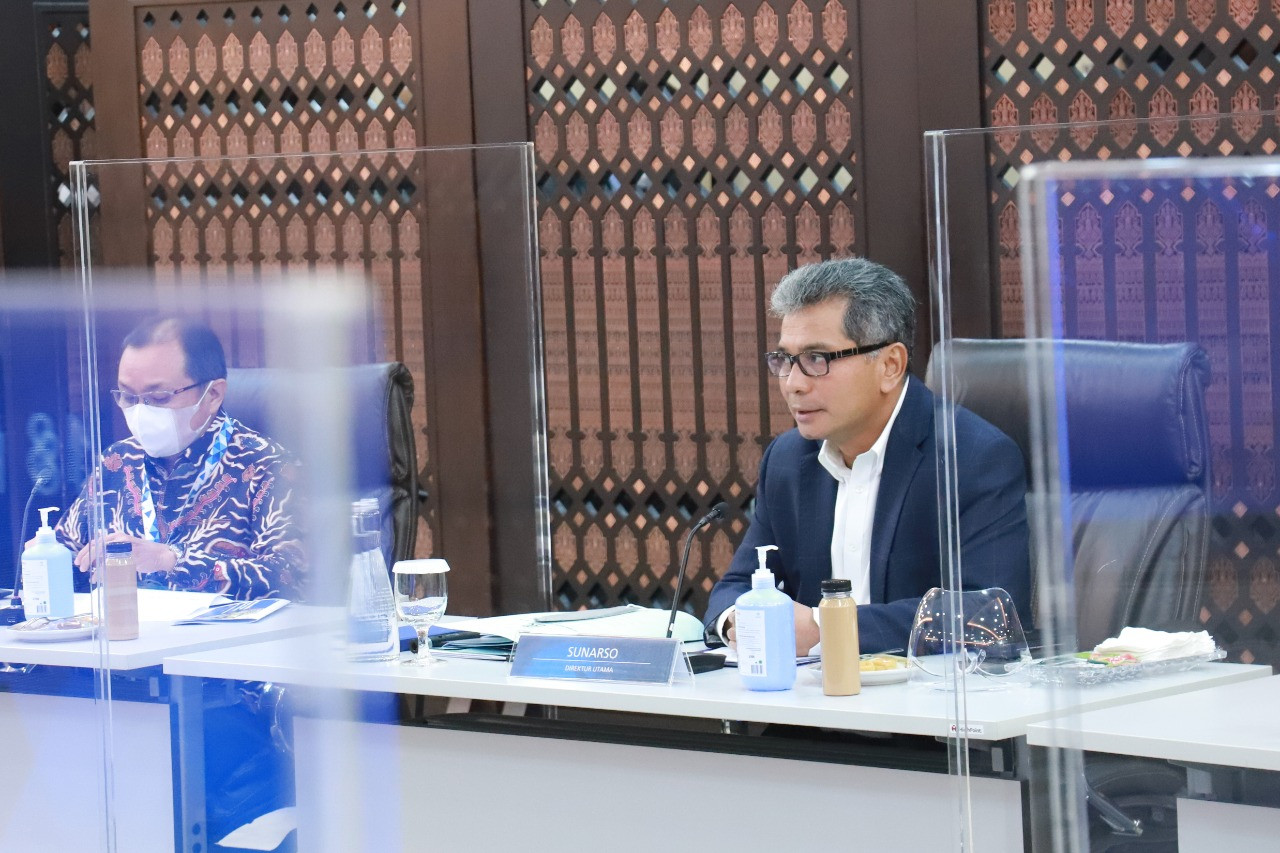
he results of the MSME Business Activity Survey in the fourth quarter of 2020 indicated that MSME business activities had decreased slightly from the previous quarter. This is reflected in the BRI Micro & SME Index (BMSI), which fell from 84.2 in the third quarter to 81.5 in the fourth quarter of 2020. Even so, MSME agents are still optimistic about welcoming the first quarter of 2021, which is shown by the expectations of BMSI that remain above the 100 threshold. This was stated by the president director of BRI, Sunarso, in a virtual press conference in Jakarta on Feb.18.
The decline in BMSI is in line with the decline in GDP of -0.42 percent from the third quarter to the fourth quarter of 2020. This decrease was caused by three factors, namely: (1) the impact of tightening social activities and community mobility, (2) seasonal factors, and (3) weather that disrupted the production of MSMEs. The implementation of strict large-scale social restrictions (PSBB) at the end of the third quarter of 2020, which was followed by the shortening of Christmas and New Year 2020 collective leave, caused many consumers to cancel their year-end holiday and shopping plans, which further suppressed the performance of the MSME business.
BMSI components recorded that the largest decline were production volume and sales value. As a result, the volume of inventories for input goods, finished goods, and the use of labor was also lower than in the previous quarter. If we look at the sectoral BMSI, almost all sectors have experienced a decline, except for the manufacturing sector. The largest decline occurred in the hotel and restaurant sectors.
The implementation of stricter health protocols for travel activities, as well as reducing year-end holidays, has led many consumers to cancel their travel and shopping plans. This has caused many hotels, modes of transportation and trade businesses to experience reduced income. On the other hand, the decline in BMSI in the agricultural sector is related to the start of the planting season, so that agricultural production, especially food crops, has decreased. Furthermore, the BMSI level in the mining and construction sector was also lower than the previous quarter, due to high rainfall which disrupted construction (housing) activities and mining production activities. On the other hand, BMSI in the manufacturing sector increased, in line with increased business activity to anticipate demand ahead of the Christmas and New Year celebrations.
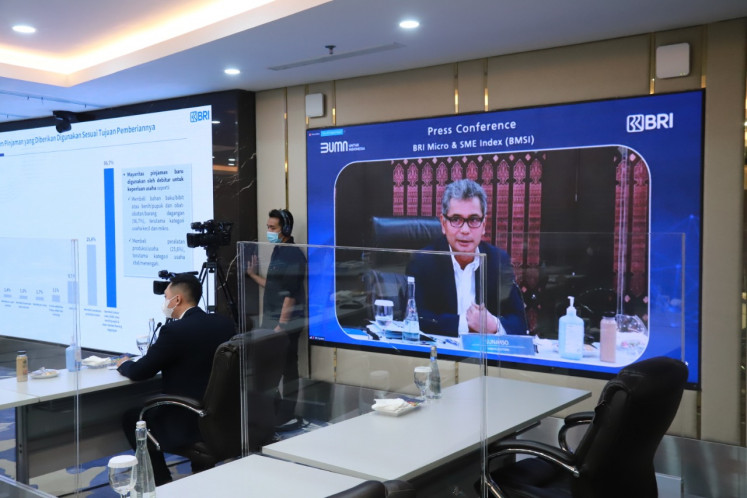
Sunarso added that even though BMSI had decreased, the optimism of MSME agents was maintained, as reflected in the expectation index. The BMSI expectation index was recorded above 100, namely 105.4 in the fourth quarter of 2020. This shows that the majority of MSME agents are still optimistic that their business activities will improve in the first quarter of 2021.
However, when compared to the third quarter of 2020, the expectations of BMSI in the fourth quarter of 2020 were slightly lower. This means that the optimism of MSMEs in welcoming the first quarter of 2021 is not as high as the optimism of welcoming the fourth quarter of 2020. The main cause is the still increasing trend of new Covid-19 cases, followed by restrictions on community activities (PPKM) in Java and Bali.
In this survey, BRI came across interesting findings, although the evaluation of MSME agents on the economy in general has decreased, it turns out that the assessment of government performance is still high. This can be seen in the increase in the index of confidence of MSME business agent (IKP) to the government in the fourth quarter of 2020 to a level of 136.3 from the level of 126.8 in the previous quarter. IKP above the limit of 100 indicates that MSME agents believe in the government's ability to carry out its duties and obligations. The highest increase in the IKP component in the fourth quarter of 2020 occurred in the confidence indicator that measures the government's ability to increase economic growth.
MSME agents seem more confident that the economy will recover if the pandemic is successfully controlled. In addition, the government's efforts to continue assisting the recovery of the MSME sector through the continuation of PEN in 2021 also add to this confidence. "The restructuring program, interest subsidies, and new loans have proven delivering a positive impact on the performance of MSMEs to survive and rise. The ability of MSME debtors is getting better in fulfilling their obligations to pay loan principal and interest,” added Sunarso.
BRI's Commitment to Encourage the Growth of the MSME Segment
BRI continues to seek new sources of growth in the MSME segment, especially the micro segment, which is the company's business focus. In the future, BRI will even touch a smaller segment, namely Ultra Micro. Based on research data from the Ministry of Cooperatives, there are 57 million MSME businesses in Indonesia, of which 30 million have not had access to formal funding. Nevertheless, 5 million of them still receive funding from moneylenders. “BRI realizes that to empower and develop the ultra-micro segment, technology and digitalization are needed, so that BRI can serve as many people as possible at the lowest possible cost. This can be achieved by going smaller, go shorter and go faster, ”concluded Sunarso.
Information about the BMSI Survey
The Bank Rakyat Indonesia MSME Business Activity and Sentiment Survey has a sample of 5,000 MSME company respondents spread across all economic sectors and in 33 provinces. The sample selection is carried out using the stratified systematic random sampling method, so that it can represent the business sector, province and business scale. This survey was conducted by the BRI Research Institute on Jan.11 – Feb. 3, 2021. Interviews were conducted by telephone with strict quality control so that the data collected was valid and reliable.
The information collected in this survey is the perception of MSME business agents on the development and prospects of the economy in general, the respondent's business sector as well as the development and projections of the respondent's business performance. This information is used to compile the Business Activity Index (IAB), Business Sentiment Index (ISB) and the Entrepreneur Confidence Index (IKP) of MSME businesses to the government. These indexes complement similar indexes compiled by Bank Indonesia and the Central Bureau of Statistics, where the survey was conducted of medium and large business actors. In addition, information was collected about the respondent's business conditions for monitoring purposes and at the same time being an early warning system (EWS) for the business continuity of MSME debtors.
In this survey, respondents answered a number of questions, where for each question the respondent could give positive answers (Higher or Better), negative answers (Lower or Worse), and neutral answers (Same or Fixed). The diffusion index is calculated from the difference between the percentage of positive answers and the percentage of negative answers plus 100. In this case, the neutral answer is ignored. The mean diffusion index value is 100, and the diffusion index range will be in the range of zero to 200. If all respondents give negative answers, the diffusion index will be zero. On the other hand, if all respondents give a positive answer, the diffusion index will be worth 200. A diffusion index above 100 indicates that positive answers exceed negative answers. On the other hand, a diffusion index below 100 indicates more negative answers than positive answers.
Keywords: BMSI, BRI Micro & SME Index, BRI, BBRI, Micro, UMKM, Ultra Micro.
Information of BANK BRI can be accessed on the website www.bri.co.id
For further information, please contact:
Aestika Oryza Gunarto Corporate
Secretary Tel. : 021-575-1966
Fax. : 021-570-091