TheJakartaPost
Please Update your browser
Your browser is out of date, and may not be compatible with our website. A list of the most popular web browsers can be found below.
Just click on the icons to get to the download page.


Popular Reads
Top Results
No results found. Please check your search term and try again
Can't find what you're looking for?
View all search results
 Unfolding Stories
Popular Reads
Top Results
No results found. Please check your search term and try again
Can't find what you're looking for?
View all search resultsBanking sector risk remains manageable amid pandemic
The COVID-19 outbreak, which first hit Indonesia in early March, continues to linger.
Change text size
Gift Premium Articles
to Anyone
Share the best of The Jakarta Post with friends, family, or colleagues. As a subscriber, you can gift 3 to 5 articles each month that anyone can read—no subscription needed!
T
he COVID-19 outbreak, which first hit Indonesia in early March, continues to linger. The prolonged pandemic is expected to affect the performance of the banking industry, due to weakened demand for credit and disruptions to domestic economic activity.
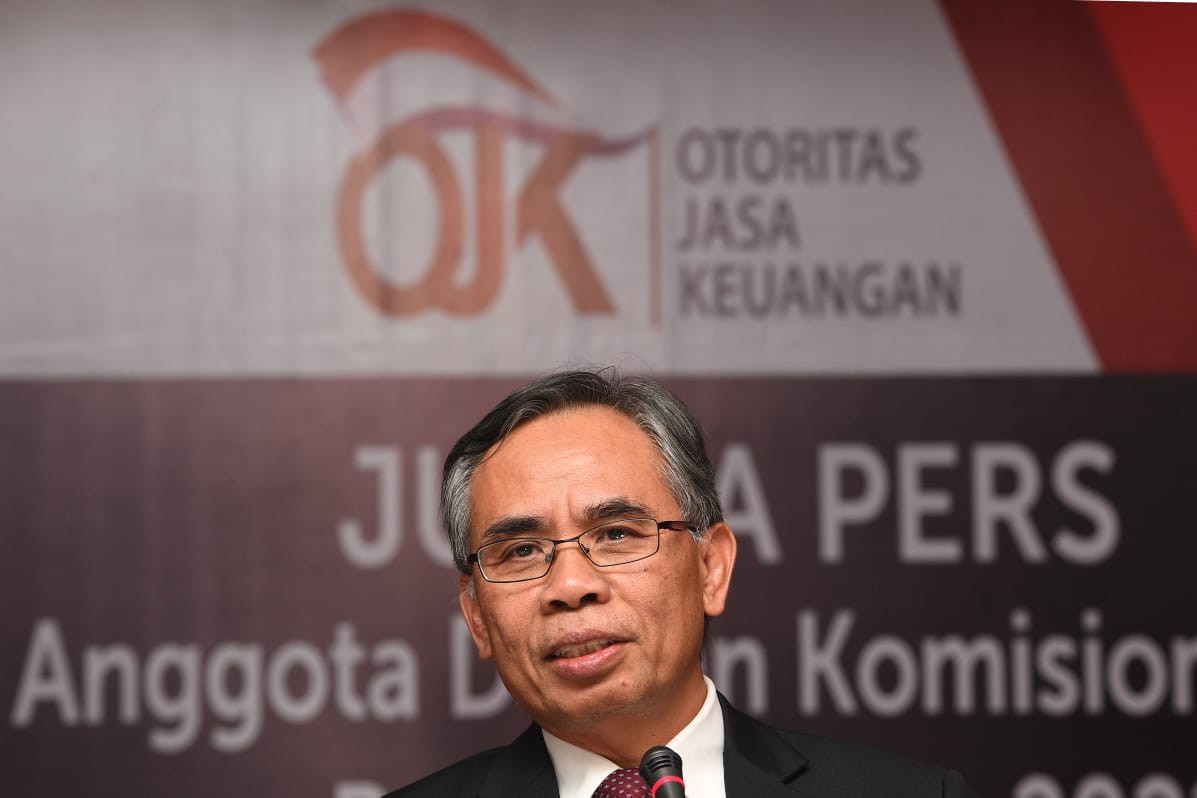
Financial Service Authority (OJK) chairman Wimboh Santoso has given his assurance that the banking industry remains manageable, supported by high capitalization and sufficient liquidity, despite the pressure experienced in intermediary banking due to the economic slowdown.
The capital and liquidity of the banking industry remain adequate. The industry continues to see increasing capital, with the sector recording a 23.2 percent increase in August, up from 22.96 percent seen in July.
Meanwhile, liquidity instruments have also gone up thanks to the growth in third-party funds (DPK) and the decline in credit demand. The liquidity instrument/non-core deposit ratio and the liquidity instrument/DPK ratio sit at 148.01 percent and 31.68 percent, respectively, far above their respective thresholds of 50 percent and 10 percent. Meanwhile, the loan-to-deposit ratio (LDR) is recorded at 85.1 percent.
“In terms of banking capital, the figure is sufficient and should not be a cause for concern, at 32.2 percent, far above the minimum threshold of 12 percent,” Wimboh said.
The executive said intermediary banking had seen positive year-on-year (yoy) growth, despite the slight decline in growth, compared to the previous period. As of August, the banking sector had seen 1.04 percent (yoy) growth in credit, as a result of the decrease in the disbursement of new loans by national private-public banks.
Meanwhile, state-owned banks (Persero) and regional development banks (BPD) have seen sound credit growth. This shows that the private sector remains cautious, adopting a “wait and see” attitude toward the future risk outlook.
“We’ll encourage the banking sector to speed up the new credit distribution process so that we can compensate for the decline in credit disbursement in January until June,” he said.
In terms of utilization, working capital credit (KMK) has contracted 0.95 percent (yoy); while investment credit has seen positive growth of 4.56 percent (yoy). A decline in the value of the KMK debit tray from a number of big debtors led to the drop in distributed KMK in August.
A range of stimulus programs provided by the OJK and the government have had a positive impact on micro, small and medium enterprises (MSMEs) as reflected in the 0.18 percent month-on-month growth for MSME’s in the July to August period, although overall, loans to MSMEs from March to June 2020 still contracted 2.35 percent.
In general, with the range of policies issued by the OJK and other members of the Financial System Stability Committee (KSSK), risk in the banking sector remains at a manageable level, with the gross non-performing loan (NPL) rate recorded at 3.22 percent, unchanged from July.