TheJakartaPost
Please Update your browser
Your browser is out of date, and may not be compatible with our website. A list of the most popular web browsers can be found below.
Just click on the icons to get to the download page.


Popular Reads
Top Results
No results found. Please check your search term and try again
Can't find what you're looking for?
View all search results
 Unfolding Stories
Popular Reads
Top Results
No results found. Please check your search term and try again
Can't find what you're looking for?
View all search resultsGreen mobility coming to Jakarta
Change text size
Gift Premium Articles
to Anyone
Share the best of The Jakarta Post with friends, family, or colleagues. As a subscriber, you can gift 3 to 5 articles each month that anyone can read—no subscription needed!
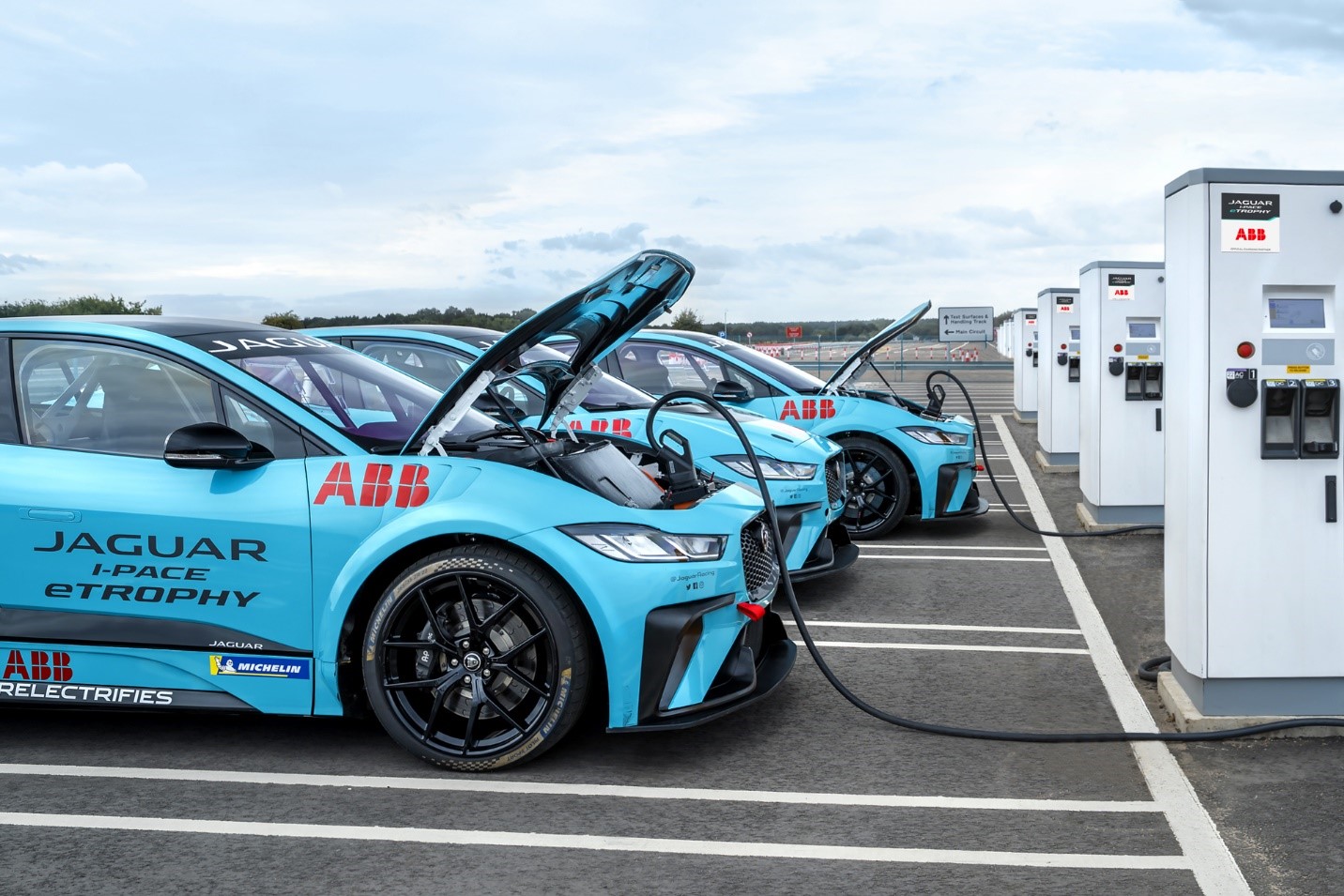 ABB, the title partner of Formula E since 2018, brings the latest innovations in electric vehicle and alternative energy solutions to city centers around the world. (Photo Courtesy of ABB)
T
he Fourth Industrial Revolution is changing the way we power our societies, produce our goods and services. Indeed, it is changing our way of life.
Research by consultancy firm McKinsey has found that the so-called disruptive opportunities such as electric and (semi) autonomous vehicles will account for half of the $7.7 trillion automotive market in 2030.
Royal Dutch Shell Plc, one of the world’s biggest oil and gas groups, has confirmed the trend toward an electrified future. The group says it aims to become the world’s largest electricity company, according to a Financial Times report. ABB has come up with two technologies that did not exist 10 years ago: collaborative robots and electric vehicle (EV)-charging infrastructure, both of which are changing the way we live and work.
The building blocks for e-mobility are in place. The technology is ready for large-scale adoption and there is a variety of vehicles to choose from. Europe and China, two key markets driving the uptake of EVs, have seen an acceleration of the adoption of EVs. According to a report by the IEA, the global electric car fleet exceeded 5.1 million in 2018, up 2 million from the previous year and almost doubling the number of new electric car sales.
China remains the world’s largest electric car market, followed by Europe and the United States. Norway is the global leader in terms of electric car market share. Major automakers such as Nissan, Volkswagen, Daimler and BMW are all moving in the direction of making EVs, and the line-up of vehicles is impressive.
In Indonesia, the EV industry is just starting to pick up pace. Indonesia’s President Joko Widodo recently signed long-awaited regulations on EV. The President wants the country to become the second-largest EV production center in Southeast Asia, and reduce dependence on fossil fuels.
In the field of fast-chargers, ABB is the global leader with more than 10,000 fast-charging stations installed in more than 73 countries. ABB Ability™, the company’s offering of digital solutions and services, enables the chargers to connect to cloud technology to allow remote monitoring and maintenance of the vehicles.
Last December, ABB Indonesia supported the Indonesia Agency for the Assessment and Application of Technology (BPPT) in a pilot project for EV charging to accelerate the adoption of EV for greener and smarter mobility. For EV enthusiasts, this could mean that access to EV charging will soon be easier when ABB EV chargers will be available in a few locations in Jakarta.
When it comes to green mobility, ABB Formula E certainly will bring a sensational experience to Jakarta. In June 2020, Jakarta will witness the latest in green technology. The electrifying race will not only entertain audiences with high-speed racing, but also play a major role in raising awareness about how far EVs have come, with innovation and the latest technology. The resulting change in perception will hopefully increase the adoption rate of EVs, leading to sustainable mobility for generations to come.