TheJakartaPost
Please Update your browser
Your browser is out of date, and may not be compatible with our website. A list of the most popular web browsers can be found below.
Just click on the icons to get to the download page.


Popular Reads
Top Results
No results found. Please check your search term and try again
Can't find what you're looking for?
View all search results
 Unfolding Stories
Popular Reads
Top Results
No results found. Please check your search term and try again
Can't find what you're looking for?
View all search resultsSecrets of Huawei’s financial management success
Change text size
Gift Premium Articles
to Anyone
Share the best of The Jakarta Post with friends, family, or colleagues. As a subscriber, you can gift 3 to 5 articles each month that anyone can read—no subscription needed!
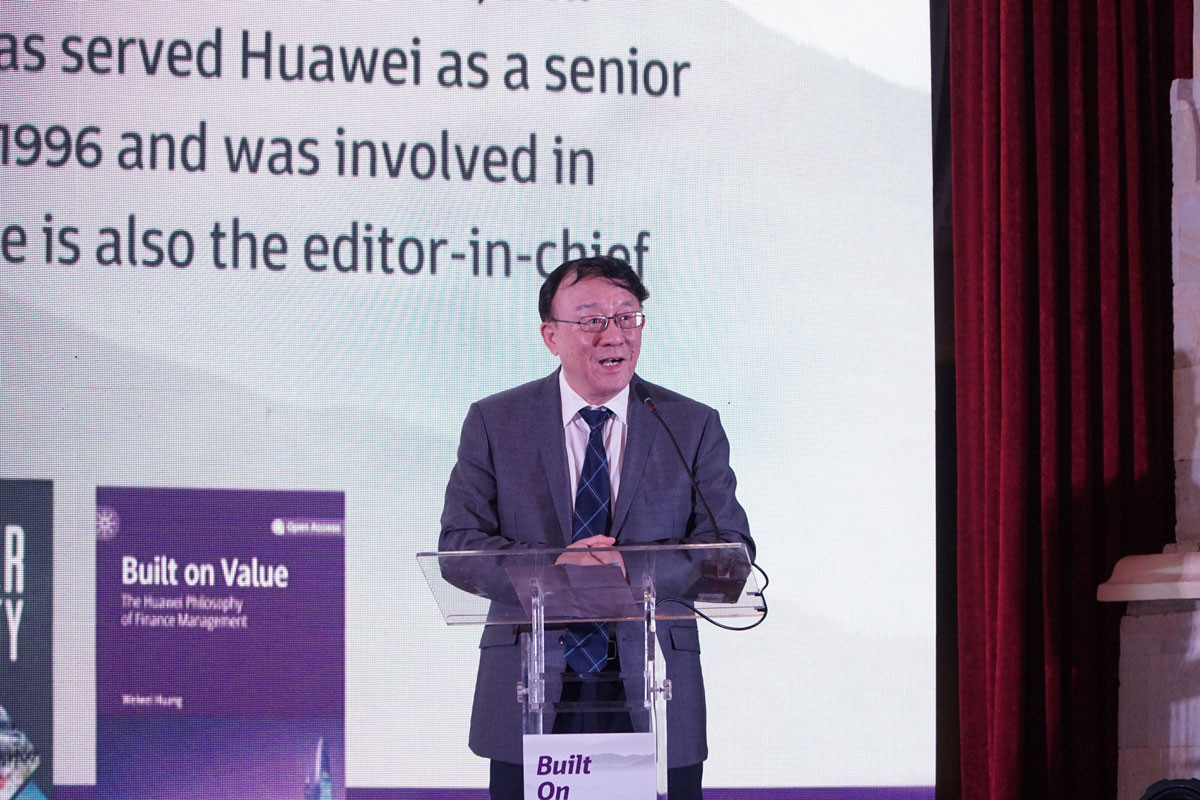 Professor Weiwei Huang. (Photo Courtesy of Huawei)
A
rguably, the growth of Chinese telecommunications company Huawei has by far outpaced that of its Chinese and some of its international competitors.
In the first quarter of 2019, Huawei reported a first-quarter revenue growth of 39 percent year-on-year to US$26.8 billion. In the same period, Huawei’s smartphone shipments surged 50 percent year-on-year, while at the same time Apple’s shipments dropped 30 percent and Samsung ‘s fell by 8 percent.
With the new figures, Huawei captured a 19 percent share of the global smartphone market in the first quarter of 2019. It commanded a 31 percent share of the global mobile infrastructure equipment in 2018.
The company, through its artificial intelligence (AI) development arm Huawei Cloud, has also unveiled its latest AI solution called ModelArts, which helps offices integrate various business activities under a comprehensive, real-time data management system.
Huawei is also known as the pioneer of 5G internet connection, despite pressure from the United States, which is persuading countries to ban the Chinese group’s telecommunications equipment from their 5G networks.
What are the secrets that helped Huawei make a quantum leap from its humble beginnings as a telephone equipment company supplying the rural Chinese market in 1987 established by its current director and chief executive officer (CEO) Ren Zhengfei, to its current status as a global telecommunications business leader?
Zhengfei, like other Huawei team members, believes that the key to the company’s success lies in the superb management style.
The company manages its business professionally following principles of the Western management science, particularly one outlined by American management guru Peter Drucker, according to Renmin University of China Business School professor Weiwei Huang, who also serves as Huawei’s senior management consultant.
While transforming its business in 1999 to adjust to the professional management principles that had been globally accepted, Huawei enlisted the help of consultants from American information technology company IBM and business management consultancy company Accenture to help Huawei adopt their best practices, Huang says.
In order to share more details on how Huawei’s management style has contributed to the company’s success, this year Huang has published a series of books under academic publishing houses Palgrave Macmillan and LID Publishing Group focusing on different aspects of the company’s management.

The first two are called Customer Centricity: The Huawei Philosophy of Business Management and Dedication: The Huawei Philosophy of Human Resource Management.
On June 19, Huawei and Palgrave Macmillan launched the third book, which completed Huang’s management trilogy, called Built on Value: The Huawei Philosophy of Finance Management with a gala dinner inviting Huawei’s business partners in Jimbaran, Bali.
“If you want to have comprehensive knowledge on Huawei’s management system, read the three books. Originally, we planned to publish these books for internal training at Huawei so we could systematically pass the values and management philosophies established by our founder and CEO on to our junior and middle managers,” Huang told The Jakarta Post on the sidelines of the book launch.
After being aware that there were many people – especially those working for the information technology sector – out there interested to know why Huawei had become so successful, the company agreed to have the books published for a public audience, hoping they could draw some inspiration from these management principles and use them to make improvements in their own respective fields, he added.
“There are many business research projects conducted by people from Harvard Business School and Cambridge University which have tried to use Huawei as a case study but unfortunately, these studies cannot really offer a view from an insider’s perspective.”
His latest book on finance management contains collections of sayings and statements from Zhengfei himself, which have been synthesized by Huang with concrete examples and case studies. The book is written in a down-to-earth style, which makes it readable for business scholars and practitioners alike.
“Growth without the support of a solid management system can be very dangerous,” Huang quoted the CEO’s 2002 speech in the book, reflecting the company’s emphasis on sustainable long-term profitable growth. The book’s core premise is that all financial management activities – including risk management, investment, project and expansion funding – must align themselves with the company’s long-term goals and vision to become a global technology and market leader.
The book also reveals how Huawei strives to achieve this sustainable growth – by creating an adequate system whereby the company does not rely on any individual talent, technology or capital but the ecology where any employee, technology and capital which goes into the company can be optimally used to help its business flourish continuously.
This, Huang argues in his book, can be achieved through a solid research and development (R&D) department, which helps the company stay abreast of the changing business landscape, while evening out the distribution of knowledge across all of the company’s business lines.
How does this relate to finance management? The book details how Huawei carefully manages its huge spending on R&D, which is key to the company’s strong innovation and adaptability. In 2018, the company allocated 14.1 percent of its total revenue – which amounted to US$14.8 billion – to invest in R&D activities, carried out by 80,000 engineers which made up 45 percent of Huawei’s total workforce.
In his foreword to the book, American industry analyst and economist George Gilder, who focuses his studies on the technology sector, says that upon reading the book’s content it becomes apparent that “Zhengfei built Huawei in admiration for American openness, now ironically in danger of being lost in a siege of xenophobic fear of Huawei”.
Gilder concludes his foreword with the following: “But let’s take inspiration from Peter Drucker. Huawei is not a problem for American technology; it is a huge customer and huge opportunity. It offers a chance to revitalize the US economy and infrastructure with a new competitive challenge and innovative resource”.