TheJakartaPost
Please Update your browser
Your browser is out of date, and may not be compatible with our website. A list of the most popular web browsers can be found below.
Just click on the icons to get to the download page.


Popular Reads
Top Results
No results found. Please check your search term and try again
Can't find what you're looking for?
View all search results
 Unfolding Stories
Popular Reads
Top Results
No results found. Please check your search term and try again
Can't find what you're looking for?
View all search resultsBig Oil in Indonesia gets in on carbon capture
Pertamina, ExxonMobil, BP and Repsol are among the companies venturing into carbon capture projects in Indonesia.
Change text size
Gift Premium Articles
to Anyone
Share the best of The Jakarta Post with friends, family, or colleagues. As a subscriber, you can gift 3 to 5 articles each month that anyone can read—no subscription needed!
 Set as preferred source
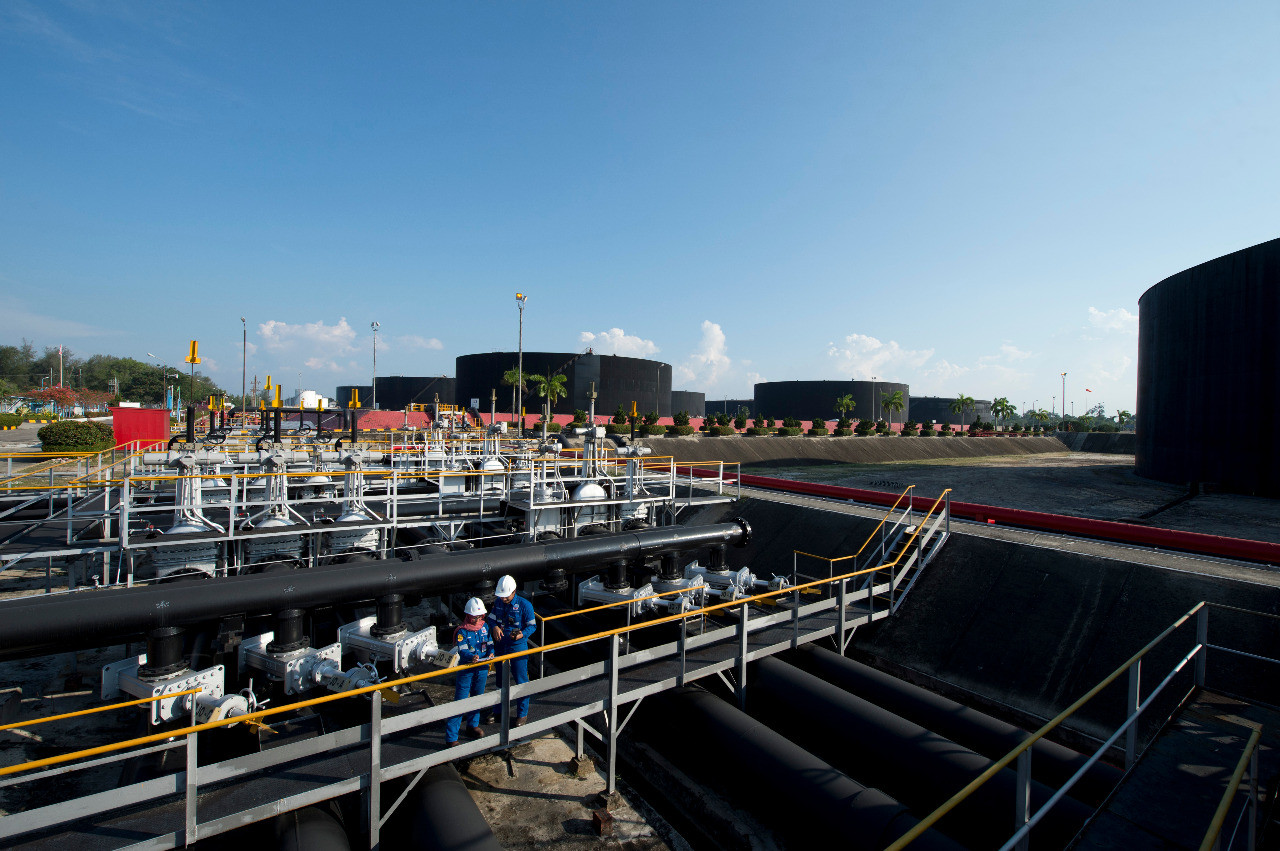 Chevron workers inspect an oil and gas facility at the Rokan Block in Riau on an unspecified date. The photo was distributed in March last year. (SKK Migas/SKK Migas)
S
ince last year, oil and gas giants have been announcing plans to develop carbon capture facilities in Indonesia to boost oil production and hit national carbon dioxide (CO2) emission reduction targets.
State-owned Pertamina and multinationals ExxonMobil, British Petroleum (BP) and Repsol announced plans to develop facilities that can absorb around 73 million tons of CO2 over a decade. The facilities are scheduled to start operations between 2025 and 2030.
However, energy experts told The Jakarta Post that carbon capture utilization and storage (CCUS) technology was an uneconomical means of reducing emissions, compared with alternatives such as reducing methane emissions from oil and gas production and transportation.
Fabby Tumiwa, executive director of the Institute for Essential Services Reform (IESR), said that it cost between US$80 and $120 to reduce 1 ton of CO2 with CCUS.
The technology would become economic if the cost could drop to $50 per ton of CO2, he said.
“CCUS would have a significant role in Indonesia’s energy transition if it could be more economical,” Fabby told the Post on Monday.
CCUS projects have been gaining momentum worldwide. The International Energy Agency (IEA) said the technology was critical to hitting global net-zero goals, but it had been plagued with a high failure rate caused by high capital costs, unclear revenue streams and limited technological readiness that risked leakage, among other issues.