TheJakartaPost
Please Update your browser
Your browser is out of date, and may not be compatible with our website. A list of the most popular web browsers can be found below.
Just click on the icons to get to the download page.


Popular Reads
Top Results
No results found. Please check your search term and try again
Can't find what you're looking for?
View all search results
Popular Reads
Top Results
No results found. Please check your search term and try again
Can't find what you're looking for?
View all search results Unfolding Stories
Govt optimistic about food price stability through Ramadan, Idul Fitri
Food commodity prices are expected to be relatively stable throughout the upcoming holiday season of Ramadan and Idul Fitri, with poor demand over the past year leading to larger stockpiles.
Change text size
Gift Premium Articles
to Anyone
Share the best of The Jakarta Post with friends, family, or colleagues. As a subscriber, you can gift 3 to 5 articles each month that anyone can read—no subscription needed!
 Set as preferred source
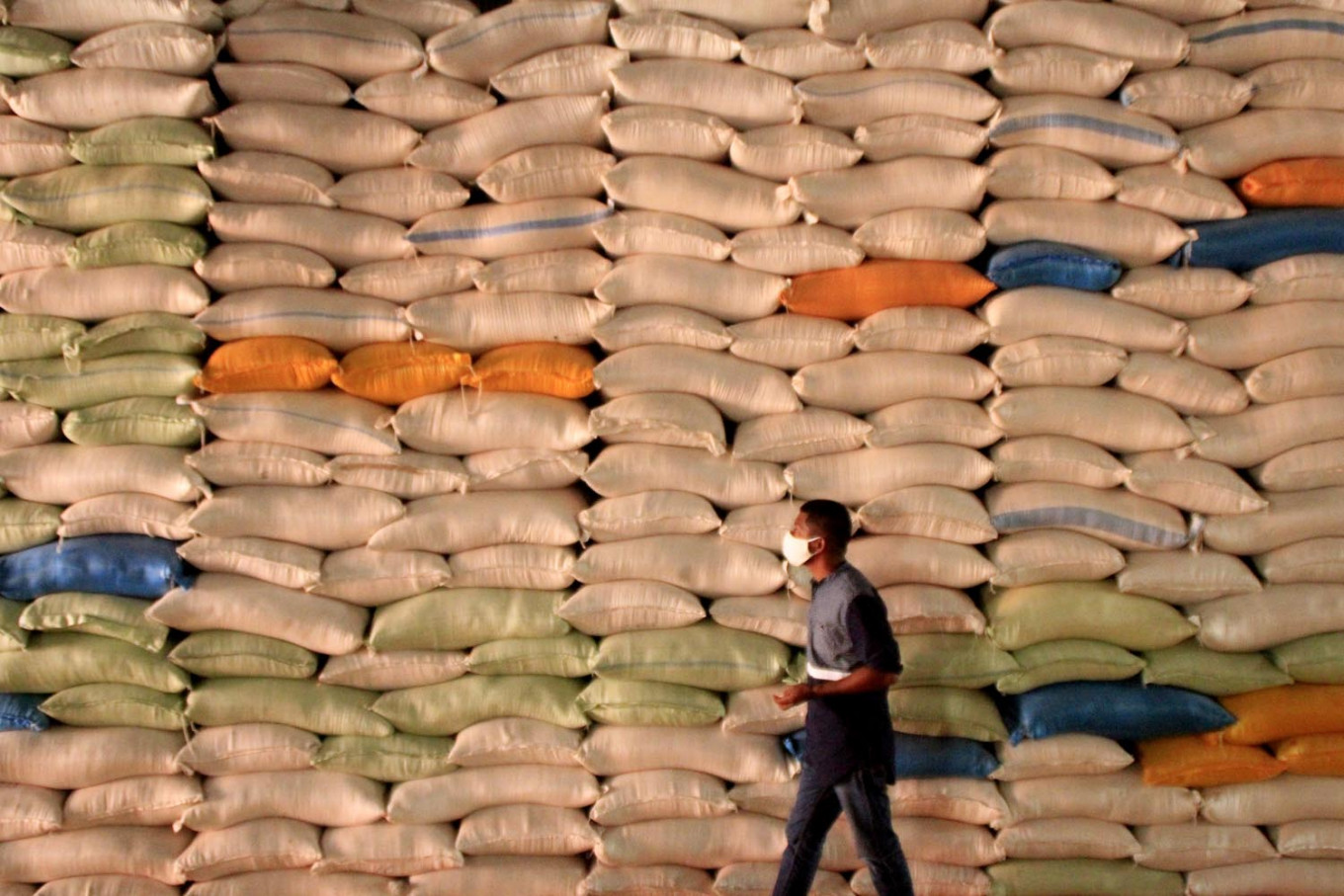 A man walks past a pile of rice sacks at a Bulog warehouse in Kupang, East Nusa Tenggara, on Monday (18/5/2020). Bulog claimed to have 14,500 tons of rice that is enough to meet demand for the coming six months. (Antara/Kornelis Kaha)
O
fficials and industry experts are optimistic that staple food prices will remain stable through the end of May, as the country has begun harvesting crops and distributing imported foods ahead the Ramadan-Idul Fitri holiday season, one of the largest in Indonesia.
Trade Minister Muhammad Lutfi said that the prices of rice, chili, sugar and other staple foods were expected to fluctuate around 2 percent on a daily basis during the holiday season. He added that the government would ensure the availability of basic food commodities by controlling the distribution of imported foods and monitoring farming activities.
The fasting month of Ramadan begins around mid-April and ends with the Idul Fitri holiday in mid-May. Ramadan is estimated to start on April 12, depending on when the new moon is sighted.
“So if prices fluctuate by 2 percent, we consider it stable, especially for commodities with high prices such as rice, sugar, and bulk and packaged cooking oil,” Lutfi told a virtual briefing on Monday.
“The Trade Ministry, on top of this, takes into account not only supply but also the yield [per hectare] at all production centers for rice, chili, onions and other commodities, the packaged cooking oil industry, as well as imported commodities such as beef and garlic,” he said.
Read also: Virus, climate change cause food shortages in parts of Indonesia
His statement reflects a turnaround from the reality in late April 2020, when most provinces saw shortages of several staple foods during Ramadan. At least 31 provinces reported a shortage of garlic while 30 provinces saw a sugar shortage that sent prices surging over the price ceiling.