TheJakartaPost
Please Update your browser
Your browser is out of date, and may not be compatible with our website. A list of the most popular web browsers can be found below.
Just click on the icons to get to the download page.


Popular Reads
Top Results
No results found. Please check your search term and try again
Can't find what you're looking for?
View all search results
Popular Reads
Top Results
No results found. Please check your search term and try again
Can't find what you're looking for?
View all search results Unfolding Stories
Is Anies really a transportation hero? Experts beg to differ
Urban transportation experts have reservations about giving credit to Jakarta Governor Anies Baswedan for his work on the capital's public transportation system.
Change text size
Gift Premium Articles
to Anyone
Share the best of The Jakarta Post with friends, family, or colleagues. As a subscriber, you can gift 3 to 5 articles each month that anyone can read—no subscription needed!
 Set as preferred source
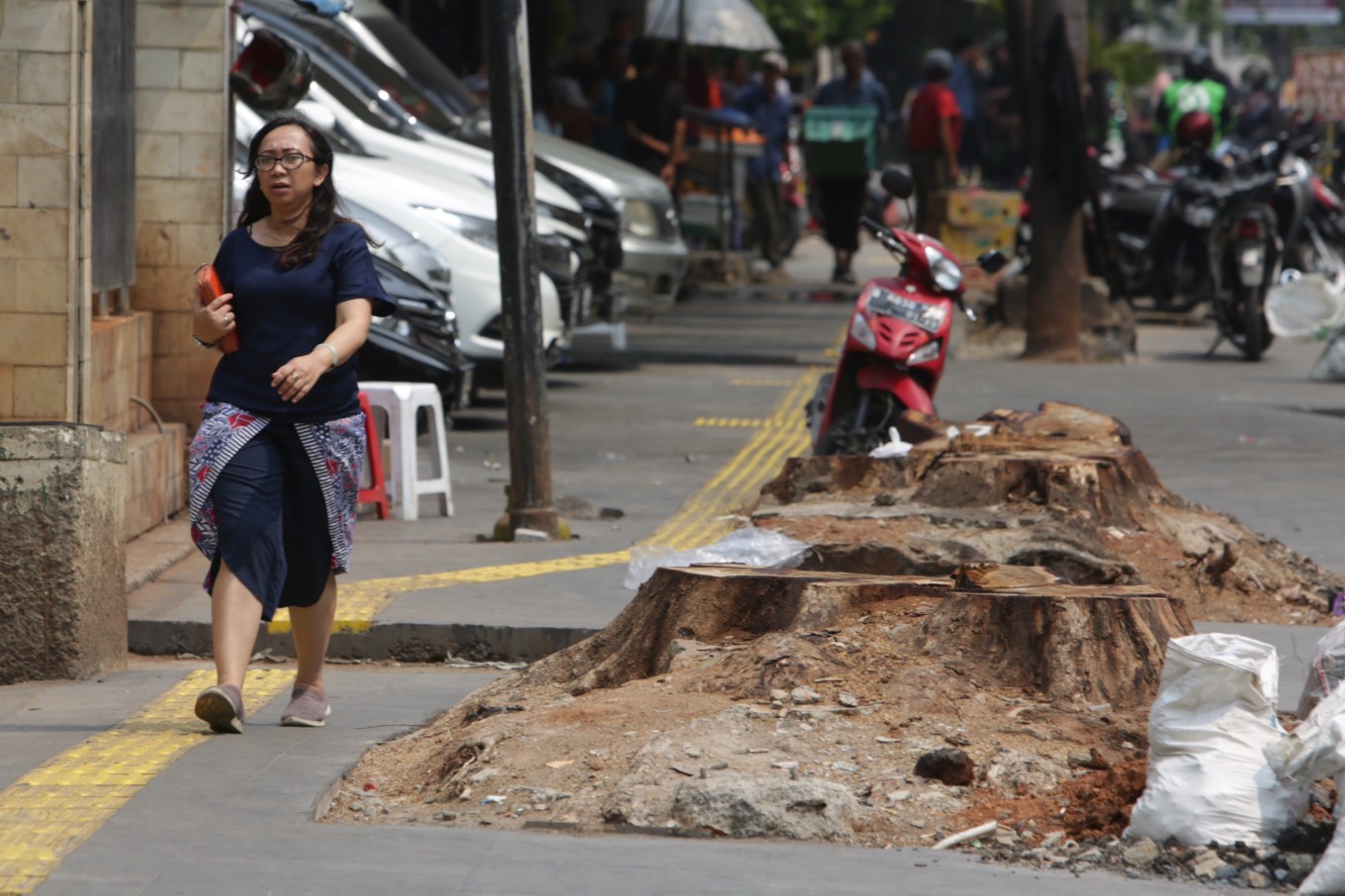 A pedestrian walks past chopped trees along the sidewalk in the Cikini area in Central Jakarta on Nov. 5, 2019. The Jakarta administration cleared the trees to make way for its sidewalk renovation project. (JP/Wendra Ajistyatama)
J
akarta Governor Anies Baswedan was recently named a 2021 Transportation Hero by the Transformative Urban Mobility Initiative (TUMI), a German-backed initiative focused on the endorsement of sustainable urban transportation.
His nomination has raised a few eyebrows with many analysts questioning whether he deserves the honor despite the Indonesian capital marking up some notable improvements under his watch since 2017.
Observers say there is still much left to be desired when it comes to untangling the city’s chaotic and piecemeal transportation system.
The former education minister’s most noteworthy achievement in this regard is his success in increasing the number of public transportation users through his administration’s flagship transit program called Jak Lingko, which allows commuters to use various modes of public transportation on one flat-rate fare.
Ridership on the city-owned bus operator PT Transjakarta increased by 22.9 percent in his first year in office, from 144.86 million passengers in 2017 to 187.9 million in 2018. The following year, this figure rose again to 265 million passengers, a 41 percent jump.
In February 2020, Transjakarta reached the 1 million passenger mark for daily ridership, just 16 years after the service was introduced onto the capital’s streets in 2004.
Needless to say, COVID-19 put a dent in this figure just a few months later, with ridership plummeting by 70-80 percent following the enforcement of mobility restrictions to curb viral transmission.