TheJakartaPost
Please Update your browser
Your browser is out of date, and may not be compatible with our website. A list of the most popular web browsers can be found below.
Just click on the icons to get to the download page.


Popular Reads
Top Results
No results found. Please check your search term and try again
Can't find what you're looking for?
View all search results
 Unfolding Stories
Popular Reads
Top Results
No results found. Please check your search term and try again
Can't find what you're looking for?
View all search resultsHow we can do better: Food influencers
"How we can do better" is a new column that takes an insider's look at various industries and the ways they could improve. In this installment, we delve into the ethical and moral codes of culinary promotion, especially the strategies that are closely tied to a specific culture.
Change text size
Gift Premium Articles
to Anyone
Share the best of The Jakarta Post with friends, family, or colleagues. As a subscriber, you can gift 3 to 5 articles each month that anyone can read—no subscription needed!
 Set as preferred source
 Cultural heritage: An array of sweet treats available at traditional markets is a prominent part of Indonesia's culinary landscape. A still from the Netflix series "Street Food Asia". (Netflix/Courtesy of Street Food Asia) (Netflix/Courtesy of Street Food Asia)
"How we can do better" is a new column that takes an insider's look at various industries and the ways they could improve. In this installment, we delve into the ethical and moral codes in culinary promotion, especially the strategies that are closely tied to a specific culture.
The prominence of social media in the modern lexicon has lowered the barrier of entry for foodies to become the opinion leaders they aspire to be. Some are in it to score good endorsement deals, and some are fighting for a cause. The intention may vary, but the complexity of food remains the same: shed a few layers beyond what is served on the plate, and there lie dimensions of one's identity and pride.
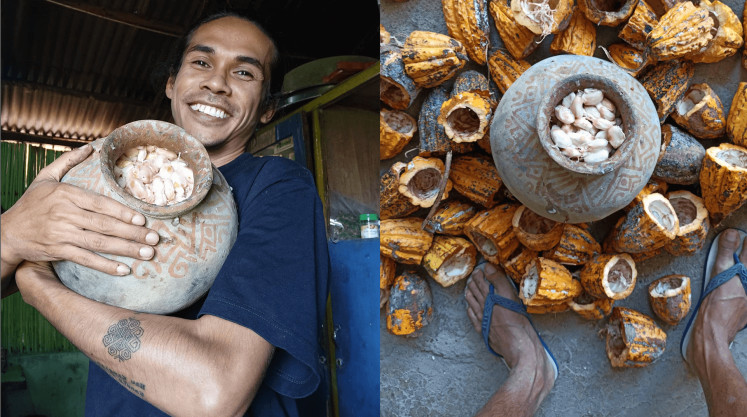
As food activist Dicky Senda puts it: "There is more to food above its taste and satiety, a portrait of politics, history, culture, art. Food also [represents a culture’s] ecology, sustainability, preservation — a lot of narratives that hold greater importance than taste."

Dicky uses an obvious example.
"Rice is central to Indonesians' lives today and it is because of the green revolution, as well as rice self-sufficiency politics under Soeharto’s regime that played a huge part. Food could also be closely tied to art, like how here in Mollo, East Nusa Tenggara, where I live, there is a certain dance performed right during the harvest season," Dicky told The Jakarta Post.
How food interweaves not only with culture but also pride is proven when one local culinary storyteller's slip of the tongue went viral and caused a community outrage. In early July, a clip of Ade Putri Paramadita sharing her two cents on yellow gravy fish, a culturally significant dish to the people of Tanimbar Kei, Maluku, circulated widely on the internet.