TheJakartaPost
Please Update your browser
Your browser is out of date, and may not be compatible with our website. A list of the most popular web browsers can be found below.
Just click on the icons to get to the download page.


Popular Reads
Top Results
No results found. Please check your search term and try again
Can't find what you're looking for?
View all search results
Popular Reads
Top Results
No results found. Please check your search term and try again
Can't find what you're looking for?
View all search results Unfolding Stories
'Hostile' public spaces: Are they really for the public?
Call it the pursuit of "modernization" or the modern esthetic, but public spaces filled with facilities, structures and other ar elements that make them unaccommodating to the end-user (that would be us, the public) aren't fulfilling their basic function, never mind inclusiveness.
Change text size
Gift Premium Articles
to Anyone
Share the best of The Jakarta Post with friends, family, or colleagues. As a subscriber, you can gift 3 to 5 articles each month that anyone can read—no subscription needed!
 Set as preferred source
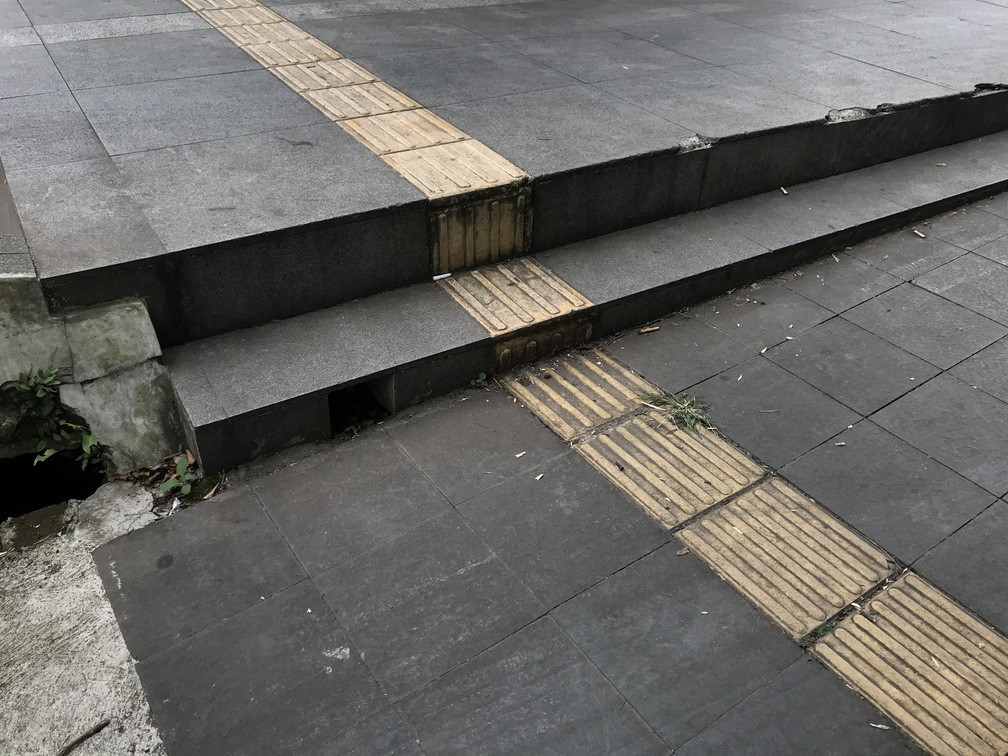 Corduroy tactile paving runs straight up a set of outdoor steps at a VENUE in LOCATION, without blister paving to indicate their presence for visually impaired people. (JP/Almer Mikhail)
T
he facilities and structures of a public space should be open and accessible to the general public as a whole, without any features that could be discriminatory against any particular group.
Simply put, badly designed public spaces are inhospitable to the ordinary folks they’re meant for.
“In MRT stations, all the benches are the same slatted benches with noticeable gaps. From what I’ve seen, they’re really not convenient for older people, [and] there are no special seats designed for them,” observed Shereen, a 26-year-old content marketing manager who commutes to work on both the Jakarta MRT and Commuter Line.

“As for the Commuter Line, before renovations, the benches were actually decent enough. After they were changed into the frame-like ones that you can’t actually sit on, it’s more difficult to rest between your commute,” she said, referring to the so-called leaning benches featuring horizontal bars at Commuter Line train stations.
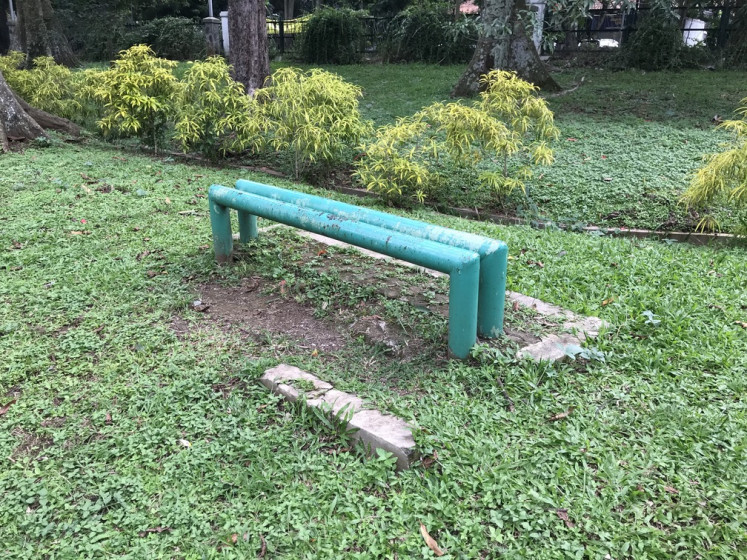
These types of urban facilities are called “hostile architecture” or “defensive urban design”, and are a way of controlling societal behavior through built environments. Common examples include the leaning benches above to deter people from sitting too long, or park benches with divider arms to prevent people from laying across them.
Such features in public spaces pose a paradox: Why are public spaces being designed so they are unwelcoming to the public?