TheJakartaPost
Please Update your browser
Your browser is out of date, and may not be compatible with our website. A list of the most popular web browsers can be found below.
Just click on the icons to get to the download page.


Popular Reads
Top Results
No results found. Please check your search term and try again
Can't find what you're looking for?
View all search results
 Trending
Popular Reads
Top Results
No results found. Please check your search term and try again
Can't find what you're looking for?
View all search resultsControversial monkey study reignites animal testing debate
The paper, "Triggers for mother love" was authored by neuroscientist Margaret Livingstone and appeared in the Proceedings of the National Academy of Sciences (PNAS) in September to little fanfare or media coverage.
Change text size
Gift Premium Articles
to Anyone
Share the best of The Jakarta Post with friends, family, or colleagues. As a subscriber, you can gift 3 to 5 articles each month that anyone can read—no subscription needed!
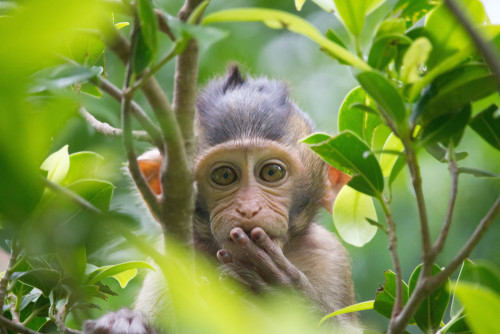 Illustration of a monkey. (Shutterstock/fontoknak)
M
other monkeys permanently separated from their newborns sometimes find comfort in plush toys: this recent finding from Harvard experiments has set off intense controversy among scientists and reignited the ethical debate over animal testing.
The paper, "Triggers for mother love" was authored by neuroscientist Margaret Livingstone and appeared in the Proceedings of the National Academy of Sciences (PNAS) in September to little fanfare or media coverage.
But once news of the study began spreading on social media, it provoked a firestorm of criticism and eventually a letter to PNAS signed by over 250 scientists calling for a retraction.

Animal rights groups meanwhile recalled Livingstone's past work, that included temporarily suturing shut the eyelids of infant monkeys in order to study the impact on their cognition.
"We cannot ask monkeys for consent, but we can stop using, publishing, and in this case actively promoting cruel methods that knowingly cause extreme distress," wrote Catherine Hobaiter, a primatologist at the University of St Andrews, who co-authored the retraction letter.
Hobaiter told AFP she was awaiting a response from the journal before further comment, but expected news soon.
Harvard and Livingstone, for their part, have strongly defended the research.



More from The Weekender

Jakarta’s padel moment
From FOMO to full-blown obsession, padel has captured the city. What comes next may depend less on courts and more on the communities that grow around them.

The battle over memory
And why the government’s plan to rewrite its history books should alarm us all.

Are younger workers getting something right about work?
As micro-retirements gain traction, Gen Z and young millennials are challenging traditional ideas of ambition, success and when it’s okay to pause.