TheJakartaPost
Please Update your browser
Your browser is out of date, and may not be compatible with our website. A list of the most popular web browsers can be found below.
Just click on the icons to get to the download page.


Popular Reads
Top Results
No results found. Please check your search term and try again
Can't find what you're looking for?
View all search results
 Unfolding Stories
Popular Reads
Top Results
No results found. Please check your search term and try again
Can't find what you're looking for?
View all search resultsHide and seek: Being LGBT and Chinese Indonesian
Change text size
Gift Premium Articles
to Anyone
Share the best of The Jakarta Post with friends, family, or colleagues. As a subscriber, you can gift 3 to 5 articles each month that anyone can read—no subscription needed!
 Set as preferred source
 Pressured: Chinese Indonesians who are also members of the LGBT community often feel at odds with Indonesian society. (Unsplash/Road Trip with Raj)
F
or Chinese Indonesians who are members of the LGBT community, Indonesia can be a challenging place to live – to say the least.
Twenty-four-year-old Kai Mata, an outspoken LGBT activist, an openly lesbian singer-songwriter and a Chinese Indonesian, says the hateful messages that she often receives are at the intersection of homophobia and racism.
“[They say things like,] ‘This person has a disorder. I hope you get well soon and return to normal. Or maybe you can return to your home country of China,’” said Kai, who lives in Bali. She added that she received other messages that used expletives and called her racial slurs.

Born in 1997, Kai Mata moved with her family to the United States while she was a baby, after the May 1998 Jakarta riots that targeted the city’s ethnic Chinese population. She moved back to Indonesia as an adult and uses her social media platforms to speak out against the country’s attitude toward minorities.
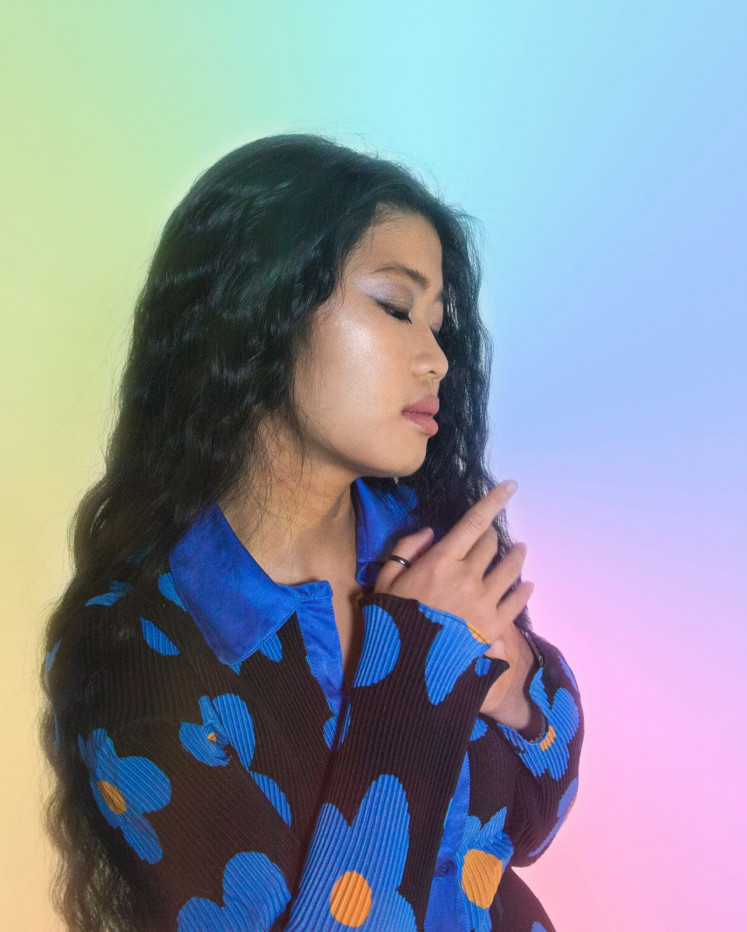
“Being both Chinese-Indonesian and a member of the LGBTQIA+ community feels like I continuously have to keep my head on a swivel for discrimination and being ‘othered’. I feel like I am constantly on the lookout for ways the government and society will attempt to strip away my humanity and my identity,” she said.
Kai cited several damaging events, including the May 1998 riots, a 2016 decision by the Indonesian Psychiatrists Association (PDSKJI) classifying homosexuality as a mental disorder and the controversial family resilience bill, which proposes that LGBT people report for ‘rehabilitation’.
More from The Weekender

Can we afford the luxury of a good night’s sleep?
From sleep patches to smart apps, we’re now exerting so much effort to attain a basic human need. But the real problem might not be in our beds.

Jakarta’s padel moment
From FOMO to full-blown obsession, padel has captured the city. What comes next may depend less on courts and more on the communities that grow around them.

The battle over memory
And why the government’s plan to rewrite its history books should alarm us all.