TheJakartaPost
Please Update your browser
Your browser is out of date, and may not be compatible with our website. A list of the most popular web browsers can be found below.
Just click on the icons to get to the download page.


Popular Reads
Top Results
No results found. Please check your search term and try again
Can't find what you're looking for?
View all search results
Popular Reads
Top Results
No results found. Please check your search term and try again
Can't find what you're looking for?
View all search resultsGenome sequencing and the future of precision medicine in Indonesia
The shortage of genomic data from local patients has hampered the country’s bid to build a more individualized treatment called “precision medicine”.
Change text size
Gift Premium Articles
to Anyone
Share the best of The Jakarta Post with friends, family, or colleagues. As a subscriber, you can gift 3 to 5 articles each month that anyone can read—no subscription needed!
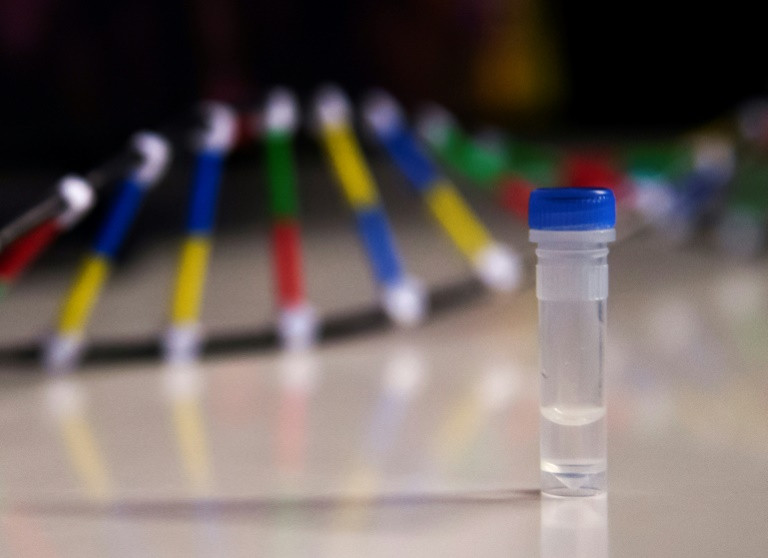 The genome is like the human instruction manual, where words are genes and letters our DNA. (AFP/Robyn Beck)
N
o doubt, genomic technologies have played a significant role in the global fight against COVID-19. Whole genome sequencing has helped track the spread of SARS-CoV-2 and identify new mutations of the virus.
The sequencing technology has also made it possible for quick development of mRNA vaccines that protect us from the virus. In short, the use of genomics has advanced public health and clinical care strategies to save more lives.
The COVID-19 pandemic may be over soon, but we know that the coronavirus is unlikely to be the last pandemic in our lifetime. New, more dangerous strains could emerge in the post-COVID era.
Certainly, there will be another pandemic in the future. Genomic surveillance is, therefore, imperative to anticipate the next disease outbreaks, especially in tropical countries with a lot of risk factors for diseases, like Indonesia.
Although the use of genomics clearly has the potential to improve healthcare outcomes, the benefits obtained by Indonesia from analyzing the whole genome have not yet been optimal. There has been a lack of biosamples from Indonesia that are instrumental in drug discovery and development, scientists say. The shortage of genomic data from local patients has also hampered the country’s bid to build a more individualized treatment called “precision medicine”.
Indonesia is not alone. About 60 percent of the world’s population lives in Asia, but the continent is still marginalized in human genetic studies. Most genetic databases being used to advance diagnostic tests and medicinal therapy come from the Caucasian race. As a result, 90 percent of medicinal treatments in 50 percent of patients are ineffective.

Unlike evidence-based medicine, in which doctors often rely on their intuition in prescribing medicinal therapies to patients, precision medicine uses genomic biomarkers to develop a personalized treatment that works and reduces patients’ risk of side effects.