TheJakartaPost
Please Update your browser
Your browser is out of date, and may not be compatible with our website. A list of the most popular web browsers can be found below.
Just click on the icons to get to the download page.


Popular Reads
Top Results
No results found. Please check your search term and try again
Can't find what you're looking for?
View all search results
Popular Reads
Top Results
No results found. Please check your search term and try again
Can't find what you're looking for?
View all search resultsPent-up demand boosts Indonesia car sales in November
Car wholesales rose by 9.84 percent month-to-month to 53,844 vehicles in November.
Change text size
Gift Premium Articles
to Anyone
Share the best of The Jakarta Post with friends, family, or colleagues. As a subscriber, you can gift 3 to 5 articles each month that anyone can read—no subscription needed!
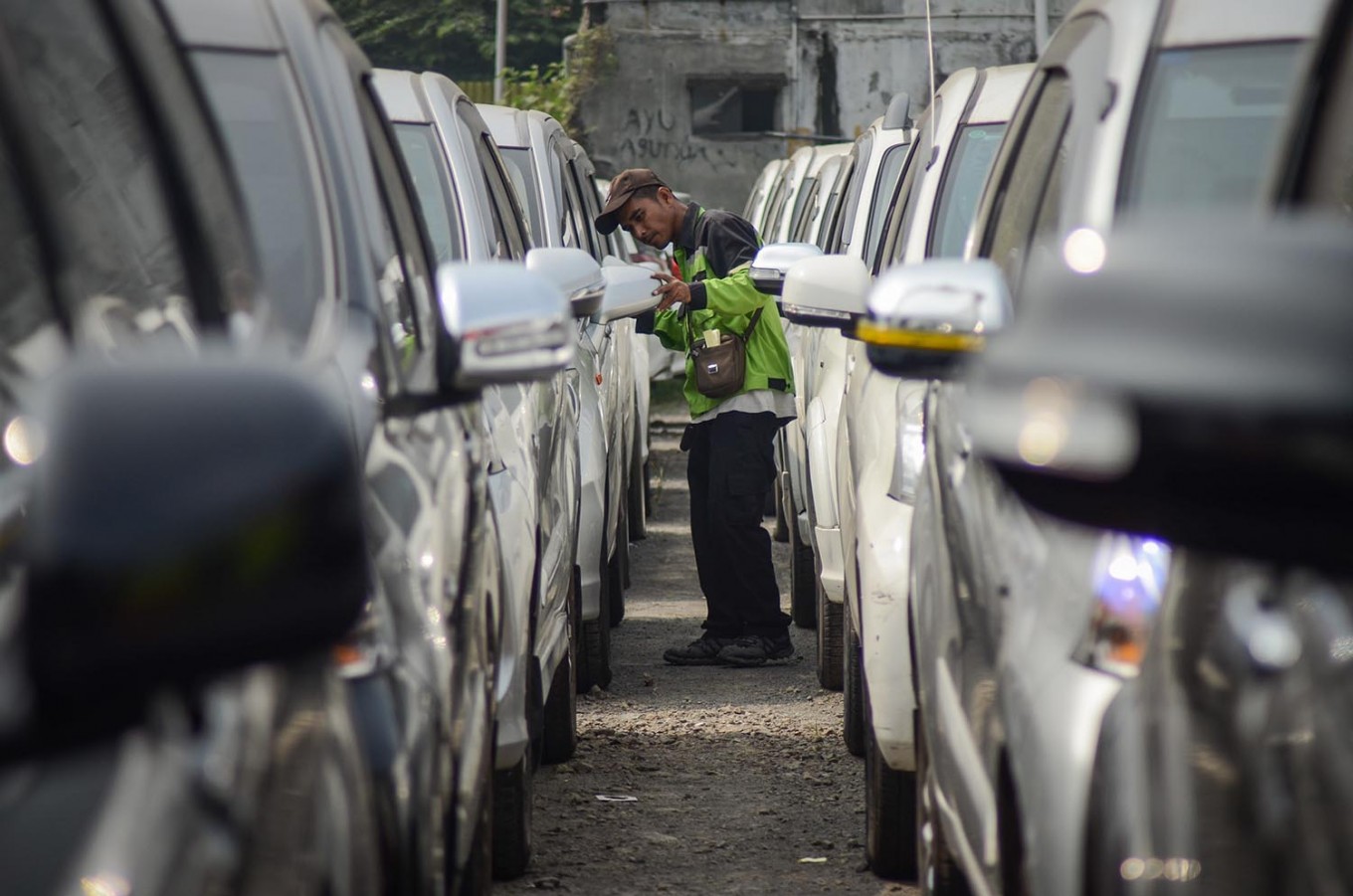 A worker checks cars rented by Astra Rent a Car in Bandung, West Java, on June 5, 2018. (Antara/Raisan Al Farisi)
T
he domestic wholesales of cars continued their upward trend in November, driven by pent-up demand as economic activity starts picking up.
Car wholesales rose by 9.84 percent month-to-month to 53,844 vehicles in November, according to Indonesian Automaker Association (Gaikindo) data compiled by diversified conglomerate PT Astra International circulated on Tuesday.
Despite the rise, the figure was still down by nearly 41 percent from 91,240 cars sold in November last year. This led to a shrinking market share for Astra International, from 52 percent in 2019 to 45 percent this year.
“[Wholesales] are still hovering at around the 50,000 level, which is good enough,” Gaikindo secretary-general Kukuh Kumara told The Jakarta Post in a phone interview on Wednesday. “The figure should have been higher because logistical and transportation needs do still exist.”
Read also: Analysis: ASEAN automotive sector hits brakes, faces long road to recovery
Kukuh said the uptick in car wholesales was driven by pent-up demand and the conclusion of some infrastructure projects, like toll roads connecting cities across provinces. Some consumers with sufficient income might buy a car to feel safe from potential COVID-19 transmission on public transportation, he added.
The coronavirus outbreak has hit the automotive sector hard as decreasing income pushes consumers to postpone big-ticket purchases such as cars, while movement restrictions discourage them from leaving their homes.