TheJakartaPost
Please Update your browser
Your browser is out of date, and may not be compatible with our website. A list of the most popular web browsers can be found below.
Just click on the icons to get to the download page.


Popular Reads
Top Results
No results found. Please check your search term and try again
Can't find what you're looking for?
View all search results
Popular Reads
Top Results
No results found. Please check your search term and try again
Can't find what you're looking for?
View all search results



Qatar hopes World Cup flying headdress will be 2022 vuvuzela
Change text size
Gift Premium Articles
to Anyone
Share the best of The Jakarta Post with friends, family, or colleagues. As a subscriber, you can gift 3 to 5 articles each month that anyone can read—no subscription needed!
 Didier Grande, tosses in the air one of the fan shemagh scarves, also known as ghutra or keffiyeh, that he designed with his business partner in the national colours of the 32 countries taking part in the World Cup tournament, inside their shop in the Qatari capital Doha, on September 27, 2022. (AFP/Karim Jaafar)
Q
atar wants the 2022 World Cup mascot of a flying white headdress to symbolise football's showcase tournament, just as the noisy vuvuzela horn did when South Africa hosted it in 2010.
A flying keffiyah headdress named La'eeb, meaning super skilful player in Arabic, is the official World Cup mascot and is omnipresent on billboards across Qatar and on television.
"La'eeb is a fun and mischievous character who comes from the mascot-verse, a parallel world where all tournament mascots live," world football's governing body FIFA said in its announcement.

"He will bring the joy of football to everyone."
The keffiyeh headdress, also known in the Gulf as a shemagh or a ghutra, is designed to protect against the sun, sand and dust.
But it has not shielded World Cup 2022 organisers from jibes on social media.
Reaction to La'eeb has been mixed.
Twitter comments have mockingly compared La'eeb to the cartoon character "Casper the Friendly Ghost" or a flying bedsheet.
But it has its fans too.
La'eeb has been adopted by some internet blockchain communities in China which have issued tokens bearing the mascot's likeness.
Qatar's World Cup organisers would like to see a repeat of the Club 2019 World Cup championship when players from the Mexican side Monterrey wore keffiyehs after winning a match.
Bertrand Roine, who won the world handball title with France and then moved to play for Qatar, has with his business partner developed the keffiyeh's link to the World Cup by designing headdresses in the national colours of the 32 countries taking part.
Roine hopes the colourful scarves will become "symbol" of the games.

"One friend told me, you have made a vuvuzela for Qatar," he said.
South Africa's deafening vuvuzela plastic horns blew their way to worldwide notoriety with fans enthusiastically honking them at every goal.
More from The Weekender
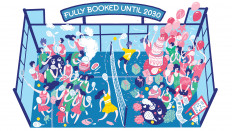
Jakarta’s padel moment
From FOMO to full-blown obsession, padel has captured the city. What comes next may depend less on courts and more on the communities that grow around them.

The battle over memory
And why the government’s plan to rewrite its history books should alarm us all.

Are younger workers getting something right about work?
As micro-retirements gain traction, Gen Z and young millennials are challenging traditional ideas of ambition, success and when it’s okay to pause.