TheJakartaPost
Please Update your browser
Your browser is out of date, and may not be compatible with our website. A list of the most popular web browsers can be found below.
Just click on the icons to get to the download page.


Popular Reads
Top Results
No results found. Please check your search term and try again
Can't find what you're looking for?
View all search results
Popular Reads
Top Results
No results found. Please check your search term and try again
Can't find what you're looking for?
View all search results





Are eco-friendly bricks the future of Indonesia's building material?
Change text size
Gift Premium Articles
to Anyone
Share the best of The Jakarta Post with friends, family, or colleagues. As a subscriber, you can gift 3 to 5 articles each month that anyone can read—no subscription needed!
 Inside the factory: Toni Permana creates eco-friendly paving blocks at his workshop in Bandung. (Courtesy of Toni Permana) (Courtesy of Toni Permana/Courtesy of Toni Permana)
Eco-friendly building materials can be a solution to minimize plastic waste, but challenges, including costly production, persist.
In recent years, Indonesia has had more emerging eco-friendly building materials.
Ovy Sabrina, the cofounder of Rebricks Indonesia, a start-up company specializing in producing eco-friendly bricks, shared her excitement over the plastic-waste donations she received to create an eco-friendly building material.

"The culture has accustomed people to get paid for each plastic they donate. I was surprised that many housewives donated their plastic waste to us for free," said Ovy.
Ovy said that each square meter of paving bricks contains about 880 plastic sachets.
Bricks and paving blocks are essential materials for development projects across the country. However, increase in production can threaten the environment and public health. The situation is not aided by the fact that Indonesia is the second-biggest marine polluter in the world, after China.
Repurpose plastic: Rebrick focuses on creating eco-friendly materials that are made of plastic sachets. (Courtesy of Ovy Sabrina) (Courtesy of Ovy Sabrina/Courtesy of Ovy Sabrina)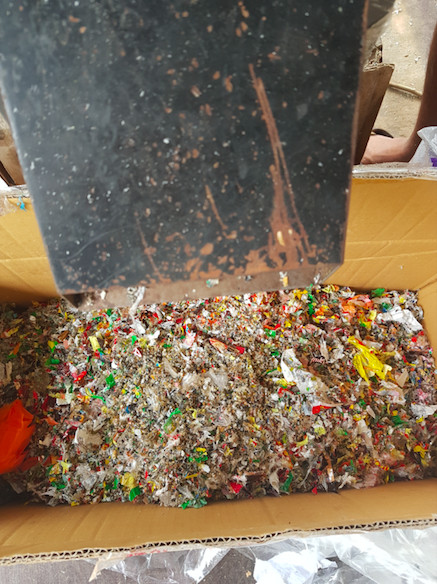



More from The Weekender

Jakarta’s padel moment
From FOMO to full-blown obsession, padel has captured the city. What comes next may depend less on courts and more on the communities that grow around them.

The battle over memory
And why the government’s plan to rewrite its history books should alarm us all.

Are younger workers getting something right about work?
As micro-retirements gain traction, Gen Z and young millennials are challenging traditional ideas of ambition, success and when it’s okay to pause.