TheJakartaPost
Please Update your browser
Your browser is out of date, and may not be compatible with our website. A list of the most popular web browsers can be found below.
Just click on the icons to get to the download page.


Popular Reads
Top Results
No results found. Please check your search term and try again
Can't find what you're looking for?
View all search results
Popular Reads
Top Results
No results found. Please check your search term and try again
Can't find what you're looking for?
View all search results





Prettier in pink: The push to remake Japan’s cherry blossom season
Change text size
Gift Premium Articles
to Anyone
Share the best of The Jakarta Post with friends, family, or colleagues. As a subscriber, you can gift 3 to 5 articles each month that anyone can read—no subscription needed!
 Pretty pink: The sekiyama cherry blossoms at a farm of the Flower Association of Japan in Yuki, northeastern Ibaraki prefecture, Japan. (AFP/Philip Fong)
J
apan's famed cherry blossom season blankets the country in the delicate white flowers of the prized and popular somei-yoshino tree, delighting residents and visitors alike. But some want change.
The cherry blossom season produces a nationwide frenzy in Japan, as forecasters compete to declare when full bloom will arrive and people unfurl picnic blankets for sometimes raucous flower-viewing parties — at least in pre-pandemic times.
The blooms of the ubiquitous somei-yoshino strain, which accounts for more than 90 percent of the cherry trees planted in Japan, last only around a week and tend to emerge simultaneously in a given region because the trees are clones of a single specimen.

And while the tree has become synonymous with blossom season, it is a growing headache for city planners because the strain is prone to disease and tends to grow too large to be well managed in urban settings.
"It's all about planting the right flora in the right place," says Hideaki Tanaka, 63, an expert on sakura — Japanese for cherry blossoms — who is trying to popularize other strains.
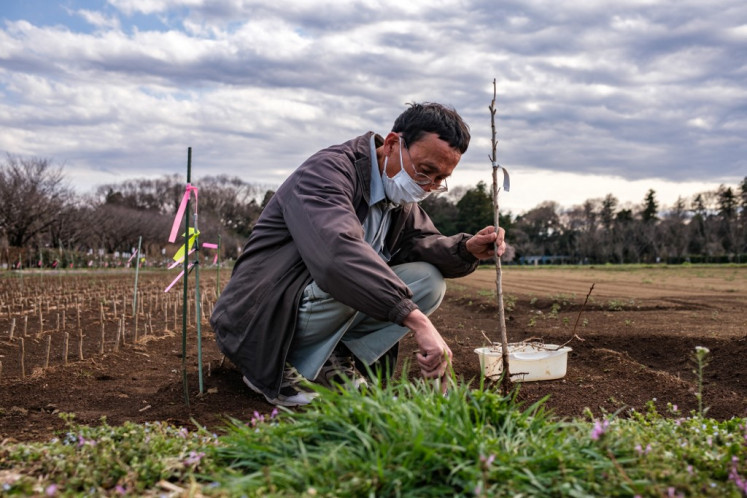
"There are all kinds of sakura, not just somei-yoshino. I want to help recreate the old times when people enjoyed a wide variety.”



More from The Weekender
Jakarta’s padel moment
From FOMO to full-blown obsession, padel has captured the city. What comes next may depend less on courts and more on the communities that grow around them.

The battle over memory
And why the government’s plan to rewrite its history books should alarm us all.

Are younger workers getting something right about work?
As micro-retirements gain traction, Gen Z and young millennials are challenging traditional ideas of ambition, success and when it’s okay to pause.