TheJakartaPost
Please Update your browser
Your browser is out of date, and may not be compatible with our website. A list of the most popular web browsers can be found below.
Just click on the icons to get to the download page.


Popular Reads
Top Results
No results found. Please check your search term and try again
Can't find what you're looking for?
View all search results
Popular Reads
Top Results
No results found. Please check your search term and try again
Can't find what you're looking for?
View all search resultsPandemic saviors, food delivery apps now under fire
But these days the platforms are increasingly finding themselves under fire, with politicians seeking to regulate the industry and restaurateurs accusing the likes of DoorDash, Grubhub and Uber Eats of freeloading. And they are looking for ways to do without them.
Change text size
Gift Premium Articles
to Anyone
Share the best of The Jakarta Post with friends, family, or colleagues. As a subscriber, you can gift 3 to 5 articles each month that anyone can read—no subscription needed!
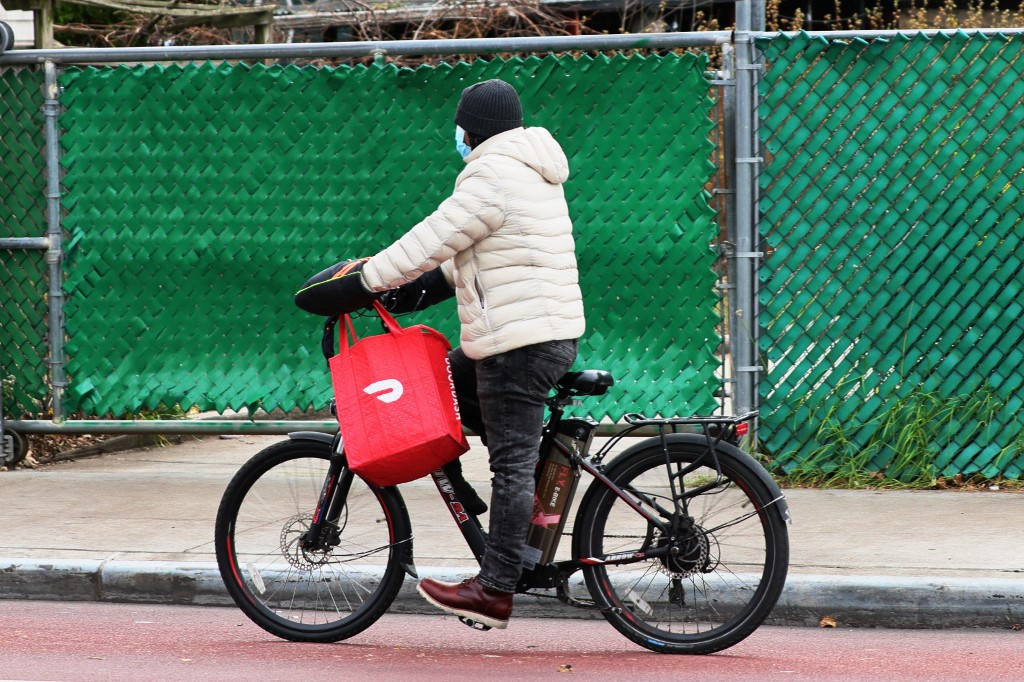 A Doordash delivery person rides their bike on Church Avenue in the Flatbush neighborhood of Brooklyn on December 04, 2020 in New York City. Food delivery startup DoorDash Inc is expected to raise its U.S. initial public offering up to $3.14 billion. (Agence France Presse/Michael M. Santiago/Getty Images/)
M
eal delivery services became essential during the pandemic, when millions of Americans were under lockdown and restaurants were shut to visitors.
But these days the platforms are increasingly finding themselves under fire, with politicians seeking to regulate the industry and restaurateurs accusing the likes of DoorDash, Grubhub and Uber Eats of freeloading. And they are looking for ways to do without them.
In just the first nine months of this year, DoorDash has likely filled over 1 billion orders, most of them in the US, where the company is the market leader.
But Mathieu Palombino, founder of the New York-based pizza chain Motorino, calls the boost provided by delivery apps a "big illusion" because more orders don't bring bigger profits to restaurants.
"When you receive thirty or forty orders a day, you are happy. But the problem is that it does not translate into profits," Palombino told AFP.
Food delivery services can charge restaurants fees of up to 30 percent of the bill for a meal, according to their web sites.

To address that problem, in August the New York city council passed a law, capping third-party delivery fees at 15 percent.